
 Business License

What Are Industrial Castings? Heavy Duty and Precision Classes
Two castings sat on the same inspection bench: a 900 kg counterweight frame for a press, and a 12 g insert for a pump shaft. Both were bought as industrial castings, both were poured in the same town, and the two had almost nothing else in common.
One was judged on soundness at a heavy section and on a machining allowance measured in millimetres. The other was judged on a tolerance band of 0.1 mm and a surface that had to seal. Treating them as one product family is the source of most mismatched quotations.
The notes below split the market into the two classes that matter, give the numbers behind each, and explain why a foundry that is good at one is not automatically good at the other.
1. Industrial Castings Basics: Two Families, One Foundry
Industrial castings basics come down to a split between mass and precision. Heavy duty work is about pouring a large section soundly and leaving enough stock to machine. Precision work is about holding a small section accurately and leaving almost no stock at all.
The two families use different moulds, different metals and different inspection. A heavy frame is poured in sand with a large box and a long cooling time. A precision insert is poured in a ceramic shell or a hot die, with a short cycle and a controlled atmosphere.
In industrial castings basics the overlap is real but narrow. A foundry with a five tonne crane and a 20 tonne furnace cannot compete on a 30 g part, and a precision shop with a 50 kg furnace cannot pour a frame. Asking which class a part belongs to is the first useful question in a quotation.
2. Heavy Duty Cast Components: Mass Over Precision
Heavy duty cast components generally start around 100 kg and run past 20 tonnes. Wall sections of 15 to 100 mm are normal, tolerances land at CT11 to CT13, and a machining allowance of 6 to 10 mm is common on faces that will be cut.
The technical problem is feeding, not filling. A heavy section stays liquid long after the thin section beside it has frozen, and the shrinkage that follows has to be fed from a riser or absorbed by a chill. A frame with a 120 mm boss on a 25 mm web is a feeding design exercise before it is a casting.
Materials are usually grey or ductile iron, carbon steel or a low alloy steel. Ductile iron dominates machine frames and housings because it damps vibration and casts into complex shapes, while cast steel appears where toughness or weldability matters.
Pour weight is the constraint that surprises new buyers. A frame at 900 kg needs a ladle, a crane and a cooling floor, and the foundry schedules it against other heavy work rather than against the week it was ordered. A delay of two weeks on a heavy job is normal and it is a capacity fact rather than a service failure.
Inspection follows the mass. A test bar per heat, ultrasonic testing on heavy sections where internal soundness matters, and a dimensional check on the machined faces. Radiography on a 100 mm section is possible and rarely economical, which is why heavy work leans on ultrasonic testing.
3. Precision Industrial Castings: Tolerance Over Mass
Precision industrial castings usually weigh between 20 g and 20 kg, with walls of 2 to 6 mm and tolerance grades around CT4 to CT7. Machining allowance falls to 0.5 to 2 mm, and on some features there is no allowance at all.
For precision industrial castings, investment and shell moulding carry most of this work, with die casting taking the higher volumes in aluminium and zinc. The mould is built around the shape rather than packed around a pattern, which is what allows a 2 mm wall and a 0.1 mm band on the same part.
The technical problem here is distortion rather than feeding. A thin wall warps as it cools, a long slender part bends, and a close tolerance on two features at opposite ends of the casting depends on how the part is supported during cooling and cut-off.
Tooling for precision work is a wax die or a shell core box, and it wears in a way that shows as a slow dimensional drift rather than as a sudden failure. A shop that tracks die life by shot count catches the drift, and a shop that waits for a reject catches it on a customer's bench.
Inspection shifts to dimensional reports and radiography of small areas. A precision part is often checked against a first article report with every dimension measured, while a heavy frame is checked on the features that will be machined and left alone elsewhere.
4. Where Heavy Duty Cast Components Meet Precision
Heavy duty cast components meet precision work in parts that are large and accurate at the same time, such as a gearbox housing with machined bearing bores. The casting is heavy, and the bores are precise because they are machined rather than cast.
That combination is normal and it is where quotations go wrong. A buyer who specifies a CT6 tolerance on a 300 kg housing is asking the foundry to cast what should be machined, and the price reflects an attempt rather than a capability.
The sensible split is to cast at CT11 and machine the two or three features that carry the function. The casting price stays low, the machining is predictable, and the finished part meets a tolerance the process can hold.
5. Weight and Wall in Industrial Castings
For heavy duty cast components weight decides the foundry, and wall decides the process. A part above the crane capacity cannot be poured at all, and a part below the minimum wall for the process will not fill whatever the drawing says.
The practical limits are worth knowing before a design is fixed. Sand casting in steel needs about 4 to 5 mm as a floor on a part of moderate size, and 3 mm on a small part close to the ingate alone. Investment casting reaches 1.5 mm, and die casting reaches about 1.5 mm in aluminium.
Handling is the third limit. A part that needs a 20 tonne crane costs more per hour than the pour, and a part that needs a special truck adds freight that a buyer rarely includes in the comparison. Ask how the part will be lifted, turned and loaded before comparing two prices, and ask Changfeng Mechanical for the handling note when the weight passes two tonnes.
Weight also drives the machining allowance. A heavy casting distorts more in heat treatment and in machining, so the allowance has to absorb a movement that a small precision part never sees.
6. Documents for Precision Industrial Castings
Precision industrial castings need a document set that differs by class, and it is worth stating on the order. Precision work normally comes with a first article inspection report, a dimensional report with measured values, a material certificate and a radiograph of the critical zone.
Heavy duty cast components normally come with a material certificate, a test bar result per heat and an ultrasonic report on the sections named in the order. A dimensional report on a heavy frame is often a list of machined features rather than every dimension.
The overlap is the material certificate with chemistry and mechanical results, and the heat number that ties every document to the parts in the crate. A supplier that cannot match the two is a supplier with a traceability gap, whatever the class.
7. Industrial Castings Basics: A Class Comparison
The table sets the two classes in industrial castings basics side by side on the numbers that decide a route, a price and an inspection plan.
| Point | Heavy duty | Precision |
|---|---|---|
| Typical weight | 100 kg to 20 tonnes | 20 g to 20 kg |
| Wall section | 15 to 100 mm | 2 to 6 mm |
| Tolerance grade | CT11 to CT13 | CT4 to CT7 |
| Machining allowance | 6 to 10 mm | 0.5 to 2 mm |
| Main process | Sand, resin bonded sand | Investment, shell, die |
| Main risk | Shrinkage at heavy sections | Distortion at thin walls |
| Main inspection | Test bar, ultrasonic testing | Dimensional report, radiography |
8. A Case: A Heavy Duty Cast Component at 900 kg
The heavy duty cast component at the top was a 900 kg grey iron frame, roughly 1,400 by 900 by 300 mm, with four machined pads and a 120 mm boss at the centre. The first two foundries both quoted and both declined to pour after seeing the boss.
The boss fed from a 25 mm web, and the web froze before the boss had finished shrinking, so the shrink had to draw from the pad above it. The third foundry added a 90 mm feeder on the boss and a chill in the web, and the parts came out sound at the radiographic check.
At Changfeng Mechanical Factory the feeder plan goes on the quotation drawing, so a buyer can see where the extra metal sits. Cost rose 8 percent against the original quotes, and scrap fell from an expected 20 percent to under 3 percent. The expensive part of the job was the feeding design, and neither of the first two quotes had included it.
At Ningbo Changfeng Mechanical Factory a heavy casting is quoted with the feeder and chill plan attached, because the plan is what the price depends on rather than the weight alone.
9. Choosing Precision Industrial Castings or Heavy Work
The class follows the part rather than the buyer's preference. A part below 50 kg with thin walls and a tight band belongs in precision work, and no amount of volume moves it to sand without a redesign.
A part above 100 kg belongs in sand, and the design has to accept the tolerance and the allowance that come with it. Trying to buy a heavy part at a precision tolerance is the most expensive mistake in this market, because it is paid for twice, once in the casting and again in the rework.
Ningbo Changfeng Mechanical quotes both classes and refuses to cross them on a drawing. When a part sits between the two, the quotation carries two routes with the machining content shown separately, so the buyer can see which one pays.
10. Frequently Asked Questions on Industrial Castings Basics
10.1 What weight counts as a heavy casting?
There is no formal line, and 100 kg is the practical one, because that is where crane handling, large moulding boxes and long cooling times start to govern the process rather than the shape. A part at 80 kg can go either way depending on the wall and the tolerance. What matters is whether the foundry has the box, the crane and the furnace for it. Ask for the crane capacity and the maximum box size before sending a drawing, since those two numbers decide whether the quote is real.
10.2 Can a heavy casting hold a tight tolerance?
Not as cast, and usually not worth attempting. A 300 kg casting moves during cooling, during heat treatment and again when the first face is cut, so an as-cast tolerance below about 1 mm is hard to guarantee. Cast at CT11 and machine the functional features, which is cheaper than chasing a grade the process cannot repeat. The allowance for that machining is 6 to 10 mm, and it belongs on the drawing before the pattern is made, so the foundry can confirm it has enough stock to leave.
10.3 Why do precision castings need a different foundry?
Because the equipment is different in every dimension. A precision shop runs small furnaces, wax injection presses, shell lines and a controlled burnout, while a heavy shop runs large boxes, big ladles and a crane. The skills differ as well, since thin wall work is about filling and distortion rather than about feeding a heavy section. A foundry that claims both classes usually subcontracts one of them, which is worth knowing before a schedule is promised, and worth asking directly which shop pours the part.
10.4 What documents should come with a heavy duty cast component?
A material certificate with chemistry and mechanical results, a test bar result per heat, and an ultrasonic report on the sections the order names. Add a dimensional report on the machined features and a heat treatment record where the part is normalised or stress relieved. The heat number has to match across all of them, or the documents describe a different casting. Keep the set with the delivery note, since an audit will ask for the two together and for the heat number on both.
Recently Posted
-
3-Axis vs 4-Axis vs 5-Axis Milling: What the Geometry Demands
November 17, 2026A shop quoted a housing with four angled ports on a three axis machine and won the order on price. Six weeks later the part was ru Read More
-
What Are CNC Milling Parts? Axes, Cutters and Achievable Features
November 17, 2026A bracket arrived with a 78 mm deep pocket, a 12 mm corner radius and a request for Ra 1.6 on the pocket wall. The shop quoted thr Read More
-
Reading a Casting Drawing: Draft Angles, Allowance and Datums
November 17, 2026A bearing housing arrived at a machine shop with a drawing that held the bore to 0.03 mm and gave no datum. The shop picked the as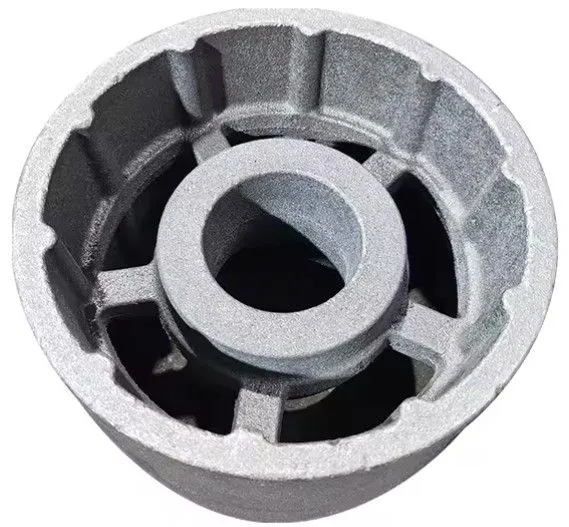 Read More
-
What Are Casting Parts? Sand, Investment and Die Cast Routes
November 16, 2026A casting is a part shaped by pouring liquid metal into a cavity. Three routes do that in three different ways: green sand uses a
Read More

Contact Us
Recommended Products
-
 Custom CNC Machining for Aluminum and Metal Parts – OEM and ODM SolutionsNegotiableMOQ: 200 Pieces
-
CNC Machining Service for Automotive Brass Fittings With 0.8μm Surface FinishNegotiableMOQ: 500 Pieces
-
CNC Machining Service for Hydraulic System Components in Carbon SteelNegotiableMOQ: 500 Pieces
-
High-Tolerance CNC Milling Parts Titanium/Stainless Steel With Smooth Finish for Aerospace Industry ApplicationsUS$ 14MOQ: 10 Units
-
Compatible CNC Machining Service for CAD Files and Various Material TypesUS$ 12MOQ: 10 Units
-
Durable CNC Aluminum Alloy Milling Parts With Anodized Finish for Electronics and Robotics EnclosuresUS$ 12MOQ: 10 Units
-
CNC Machining Service for Industrial Robotics Aluminum Alloy PartsNegotiableMOQ: 500 Pieces
-
Professional CNC Machining Services for Aluminum, Steel, and Plastic Components With Custom SizesNegotiableMOQ: 10 Units
-
Small-Scale CNC Machining Precision Metal Parts With Tight Tolerances for RoboticsUS$ 12MOQ: 10 Units
-
5-Axis CNC Milling and Turning Services for Rapid Prototyping of Metal and Alloy PartsNegotiableMOQ: 200 Pieces
-
CNC Machining Precision Metal Parts With Fast Delivery for Prototyping and ProductionUS$ 12MOQ: 10 Units
-
Medical Grade CNC Machining Precision Metal Parts for Surgical DevicesUS$ 14MOQ: 10 Units
-
Custom CNC Machining Precision Metal Parts in Multiple Sizes and MaterialsUS$ 14MOQ: 10 Units
-
CNC Machining Service for Automotive Applications: Engine Parts and Mounting BracketsUS$ 12MOQ: 10 Units
-
Hot Selling CNC Milling Turning Customized Metal CNC Machining Services Non-standard Parts Turning Milling Composite ProcessingUS$ 10MOQ: 10 Units

-
High Grade Wholesale CNC Machining Precision Metal Parts Oem Odm Customized Aluminum Alloy Milling PartsUS$ 11MOQ: 10 Units
-
CNC Milling Parts Stainless Steel/Aluminum Alloy Compatible With CNC Machines for High-Accuracy Industrial FabricationUS$ 14MOQ: 10 Units
-
Precision CNC Milling Parts Aluminum/Steel/Brass in Various Sizes for Industrial Applications & Machinery FabricationUS$ 14MOQ: 10 Units
-
Lightweight CNC Aluminum Alloy Milling Parts Optimized for Energy-Efficient Machinery and EquipmentUS$ 12MOQ: 10 Units
-
Factory Direct Sale OEM Precision Casting Forging Service CustomizedNegotiableMOQ: 10 Pieces