


 Business License

3-Axis vs 4-Axis vs 5-Axis Milling: What the Geometry Demands
A shop quoted a housing with four angled ports on a three axis machine and won the order on price. Six weeks later the part was running through five setups, the fourth one had a fixture that cost more than the machining, and the true cost per piece was twice the quote. The geometry had needed a fourth axis and nobody had asked.
The 3 axis vs 5 axis question is usually argued on machine rate, and machine rate is the least important number. What decides the route is the number of faces a tool has to reach, the angle it has to approach from and whether those two can be satisfied in one setup.
The notes below work from geometry to machine, give the feature types that force a decision, and set out where four axis sits between the two extremes.
1. 3 Axis vs 5 Axis: Where the Choice Actually Lands
In 3 axis vs 5 axis comparisons the honest dividing line is not complexity but access. A three axis machine reaches one direction, so every face that is not parallel to the table needs its own setup, and the cost of the part is set by how many setups it takes.
Ningbo Changfeng Mechanical Factory asks for the feature list before quoting, because the 3 axis vs 5 axis call usually turns on one hole rather than on the shape of the part. A five axis machine tilts the tool or the table, so a face at any angle can be reached with the part held once. The saving is not in cycle time alone; it is in the fixture count, the re-chuck error and the handling between operations.
The choice lands on a small set of features. An angled hole, a face that cannot be reached from above, an undercut and a blend that runs around a corner are the four that decide it, and a part with none of them does not need the extra axes regardless of how it looks.
2. 5 Axis Milled Parts: The Geometries That Need It
5 axis milled parts share a family resemblance. They have features on several faces that must hold position to each other, an angled feature that a tilt can reach, or a surface that is not a plane, cylinder or cone.
Most 5 axis milled parts are not curved at all, and that surprises a buyer who expected the machine to be reserved for sculpted surfaces. The strongest case is the positional one. A part with twelve holes on four faces, all referenced to one bore, is a five axis job even though every hole is a simple drilling operation, because the alternative is four setups and a stack of tolerance that grows with each one.
The second case is the contoured surface. An impeller, a port blend or a turbine blade needs the tool to stay normal to a changing surface, and a three axis machine can approximate it with a small step-over and a long cycle, and nothing closer.
3. Milling Axis Selection: Undercuts, Angled Holes and Blends
Milling axis selection starts with a feature list rather than with a part category. Write down every feature, the direction a tool must come from and the tolerance that ties it to the datum, and the axis count falls out of the list.
An undercut is the clearest forcing function. A groove that is wider at the bottom than the top cannot be cut from above at any tool angle that a three axis machine can reach, and a lollipop cutter that reaches it is a fragile answer that fails on a deep feature.
An angled hole is the least expensive case to solve. A four axis machine with the part on a rotary table presents the face, drills it and indexes back, and the cost of the fourth axis is smaller than the cost of a second setup on a three axis machine.
4. Four Axis: The Step Most Programmes Skip
Four axis sits between the two extremes and handles more work than its reputation suggests. The fourth axis is a rotation about one of the linear axes, so the part can be indexed to present a series of faces while the tool stays vertical.
Changfeng Mechanical keeps a four axis machine for exactly this family, since a rotary table removes a setup on a shaft with milled flats without paying a five axis rate. That covers a large family of parts: shafts with milled flats, manifolds with ports around a bore, couplings with cross holes and anything with features distributed around a centre line. None of those needs a tilting head.
The limit is the face that is not radial. A four axis machine can present any face that lies on the rotation, and a face that is angled relative to that rotation still needs a second setup or an angled fixture.
5. Milling Axis Selection Using a Feature Table
A feature table turns the argument into a checklist and removes the guesswork from a quotation. The table below maps the common feature types against the axis count that handles them in one setup, with the alternative when the axis is not available.
Milling axis selection becomes a five minute exercise with the table open, because the row that applies to each feature names the answer directly. Read it before pricing a part, because the row that names five axes is the row that decides whether a three axis quote is honest or optimistic.
| Feature | Axes for one setup | Three axis alternative |
|---|---|---|
| Pocket on the top face | 3 | None needed |
| Hole on a side face | 4, indexed | Second setup, re-chuck |
| Angled port at 30 degrees | 4 or 5, indexed | Angled fixture or second setup |
| Holes on four faces, one datum | 4 or 5, indexed | Four setups, tolerance stack |
| Undercut inside a bore | 5, simultaneous or lollipop tool | Fragile tool, slow cycle |
| Contoured blend around a corner | 5, simultaneous | Small step-over, long cycle |
| Impeller or blade surface | 5, simultaneous | Not practical |
6. Setup Count and Milling Axis Selection
Every setup adds three costs that a machine rate does not show. It adds a fixture, it adds a re-chuck error that consumes tolerance, and it adds a queue between operations that is measured in days rather than minutes.
At Ningbo Changfeng Mechanical Factory a part is priced on the setup count before the cycle is estimated, because a part that needs four setups on a three axis machine is rarely cheaper than the same part run once on a five axis machine. The machine rate is higher and the total is lower.
The re-chuck error is the hidden one. A bore located from a face in setup one and a hole located from a different face in setup three carry the error between those two faces, and a drawing that ties them to 0.02 mm will produce a sorting operation at the end.
7. 5 Axis Milled Parts: Simultaneous Versus Positional
5 axis milled parts are produced in two modes and the difference is often blurred in a quote. Positional work indexes the part to an angle, locks it and cuts, which is a three axis operation with a more flexible fixture.
Simultaneous work moves all five axes while the tool is in cut, which is what a contoured surface needs. It also needs a machine with the dynamics to follow the path, a post processor that produces a smooth output and a simulation that has been checked.
The cost difference is large. Positional work runs at three axis feed rates and tolerances, while simultaneous work runs slower, needs a tighter machine and produces a program that takes longer to prove.
A buyer can ask which mode a quote assumes, and the answer explains most of a price gap between two five axis quotations. Positional work on a flat-faced housing and simultaneous work on a port blend are different products even when both are described as five axis machined.
Changfeng Mechanical states the mode on the process sheet, so a part that moves from one supplier to another does not quietly change from positional to simultaneous and back.
8. Programming 5 Axis Milled Parts: Collision Risk
A five axis program carries a risk that a three axis program does not, which is that the machine can crash into itself. The tool, the holder, the table and the fixture all move relative to each other, and a collision is a repair rather than a scrap.
Simulation is therefore part of the process rather than a luxury. A checked simulation shows the stock removal, the holder clearance and the axis limits, and it catches the error that a dry run cannot show because the dry run has no stock.
Post processor quality decides whether the simulation means anything. A generic post that outputs the right coordinates but the wrong rotary direction will pass a visual check and fail at the machine, so the post is verified on a simple test part before a real job runs.
9. Cost of 5 Axis Milled Parts: Rate and Cycle
In a straight 3 axis vs 5 axis rate comparison the five axis machine costs more per hour, and the same machine often produces the lower cost part. A five axis machine costs more per hour than a three axis machine and often produces a cheaper part. The rate is higher, the setup count is lower, the fixture cost is lower and the queue between operations disappears.
The comparison holds when all four are counted. A quote that compares machine rates alone will always choose three axis, and a quote that counts fixtures and setups will choose the axis count the geometry actually needs.
Changfeng Mechanical shows the setup count and the fixture cost on the quote, so a buyer can see why a part with four angled ports is priced on a five axis machine rather than on a three axis one with four fixtures.
10. Frequently Asked Questions
10.1 When is 3 axis vs 5 axis a real decision rather than a preference?
It becomes real as soon as a feature cannot be reached from one direction, or as soon as features on two faces must hold position to each other. A part with all its work on one face does not benefit from extra axes, and a part with four angled ports does. Count the faces and the directions before comparing machine rates. A part with one working face belongs on a three axis machine whatever the drawing weighs or how the request describes the part.
10.2 What kinds of 5 axis milled parts actually need simultaneous motion?
The ones with a surface that changes direction continuously, such as an impeller, a blade, a port blend or a complex mold cavity. Everything else, including most angled holes and multi-face housings, can be done positionally with the part indexed and locked. Simultaneous motion is bought for the surface, not for the feature count. Ask for a positional toolpath on a flat-faced part, since it is cheaper to program and quicker to prove on the machine and on a first article.
10.3 How does milling axis selection change the fixture cost?
It usually removes fixtures rather than adding them. A three axis route for a four-face part needs a fixture per setup, and each one has to locate the part to a tolerance that stacks on the last. A five axis route holds the part once, so one fixture replaces three and the tolerance stack disappears with them. Count the fixtures first and the axis decision usually follows without a cost model or an argument about machine rates and hourly charges.
10.4 Is a four axis machine enough for a housing with angled ports?
Often yes, when the ports lie on a single rotation and can be indexed into position. A four axis machine with a rotary table presents each face in turn and drills or mills it with the spindle vertical. A port that is angled relative to the rotation needs a tilting head or an angled fixture, which is where four axis stops. Count how many ports are angled before choosing between four and five and before the quotation is issued to the customer.
Recently Posted
-
What Are CNC Milling Parts? Axes, Cutters and Achievable Features
November 17, 2026A bracket arrived with a 78 mm deep pocket, a 12 mm corner radius and a request for Ra 1.6 on the pocket wall. The shop quoted thr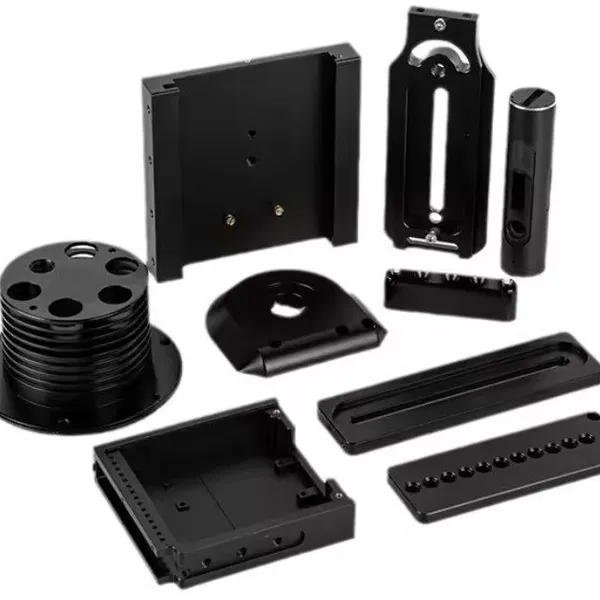 Read More
-
Reading a Casting Drawing: Draft Angles, Allowance and Datums
November 17, 2026A bearing housing arrived at a machine shop with a drawing that held the bore to 0.03 mm and gave no datum. The shop picked the as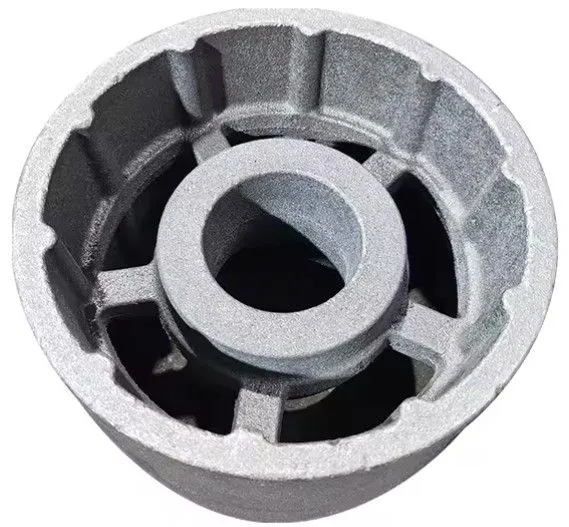 Read More
-
What Are Casting Parts? Sand, Investment and Die Cast Routes
November 16, 2026A casting is a part shaped by pouring liquid metal into a cavity. Three routes do that in three different ways: green sand uses a
Read More -
Brass Parts Surface Finishing: From As-Machined to Nickel Plated
November 16, 2026A box of brass fittings arrived with a finish the buyer had not asked for and did not want. Half the parts were bright and half we Read More

Contact Us
Recommended Products
-
 Custom CNC Machining for Aluminum and Metal Parts – OEM and ODM SolutionsNegotiableMOQ: 200 Pieces
-
CNC Machining Service for Automotive Brass Fittings With 0.8μm Surface FinishNegotiableMOQ: 500 Pieces
-
CNC Machining Service for Hydraulic System Components in Carbon SteelNegotiableMOQ: 500 Pieces
-
High-Tolerance CNC Milling Parts Titanium/Stainless Steel With Smooth Finish for Aerospace Industry ApplicationsUS$ 14MOQ: 10 Units
-
Compatible CNC Machining Service for CAD Files and Various Material TypesUS$ 12MOQ: 10 Units


-
Durable CNC Aluminum Alloy Milling Parts With Anodized Finish for Electronics and Robotics EnclosuresUS$ 12MOQ: 10 Units
-
CNC Machining Service for Industrial Robotics Aluminum Alloy PartsNegotiableMOQ: 500 Pieces
-
Professional CNC Machining Services for Aluminum, Steel, and Plastic Components With Custom SizesNegotiableMOQ: 10 Units
-
Small-Scale CNC Machining Precision Metal Parts With Tight Tolerances for RoboticsUS$ 12MOQ: 10 Units
-
5-Axis CNC Milling and Turning Services for Rapid Prototyping of Metal and Alloy PartsNegotiableMOQ: 200 Pieces


-
CNC Machining Precision Metal Parts With Fast Delivery for Prototyping and ProductionUS$ 12MOQ: 10 Units
-
Medical Grade CNC Machining Precision Metal Parts for Surgical DevicesUS$ 14MOQ: 10 Units
-
Custom CNC Machining Precision Metal Parts in Multiple Sizes and MaterialsUS$ 14MOQ: 10 Units
-
CNC Machining Service for Automotive Applications: Engine Parts and Mounting BracketsUS$ 12MOQ: 10 Units
-
Hot Selling CNC Milling Turning Customized Metal CNC Machining Services Non-standard Parts Turning Milling Composite ProcessingUS$ 10MOQ: 10 Units


-
High Grade Wholesale CNC Machining Precision Metal Parts Oem Odm Customized Aluminum Alloy Milling PartsUS$ 11MOQ: 10 Units
-
CNC Milling Parts Stainless Steel/Aluminum Alloy Compatible With CNC Machines for High-Accuracy Industrial FabricationUS$ 14MOQ: 10 Units
-
Precision CNC Milling Parts Aluminum/Steel/Brass in Various Sizes for Industrial Applications & Machinery FabricationUS$ 14MOQ: 10 Units
-
Lightweight CNC Aluminum Alloy Milling Parts Optimized for Energy-Efficient Machinery and EquipmentUS$ 12MOQ: 10 Units
-
Factory Direct Sale OEM Precision Casting Forging Service CustomizedNegotiableMOQ: 10 Pieces


