


 Business License

What Are CNC Milling Parts? Axes, Cutters and Achievable Features
A bracket arrived with a 78 mm deep pocket, a 12 mm corner radius and a request for Ra 1.6 on the pocket wall. The shop quoted three setups and a long cycle, and the parts came back with chatter marks that no amount of polishing removed.
The limitation was not the tolerance and not the finish. A 12 mm end mill reaching 78 mm into a pocket has a length-to-diameter ratio of 6.5, and a tool that slender deflects under its own cutting force. The feature was drawable and it was not millable at that aspect ratio without a different axis or a different process.
Understanding CNC milling parts basics means knowing which features a machine can reach, which cutter makes them and where the geometry stops being practical.
1. CNC Milling Parts Basics: What the Machine Can Do
A milling machine removes material with a rotating cutter against a workpiece that moves on linear axes. The spindle turns the tool, the table moves the part, and the combination of those motions produces every feature on the drawing.
Three numbers describe the capability of a machine before any feature is considered. The work envelope limits the size of the part. The spindle speed and power limit the material and the cutter diameter. The number of axes limits the faces that can be reached in one setup.
The rest of CNC milling parts basics is about the relationship between the cutter and the shape. A cutter with a radius leaves a radius, a cutter with a flat end leaves an internal corner no smaller than its own diameter, and a deep pocket is limited by how far the tool can reach without bending.
2. 3 Axis Milling Components: Three Directions and One Setup
3 axis milling components are machined with X, Y and Z motion and a spindle that stays vertical. The tool approaches from one direction, so every feature that faces that direction can be cut in a single setup, and every feature on another face needs a re-clamp.
That single fact drives most of the cost. A plate with features on one face is cheap. The same plate with four holes on the edge and two pockets underneath becomes three setups, and each setup adds handling, a possible location error and a tolerance stack.
Travel is the limit that surprises a buyer with a large part. A machine with 600 mm of X travel cannot cut a 700 mm plate in one setup whatever the table says, and the part is either re-clamped or moved to a larger machine at a different rate. 3 axis milling components above the envelope are quoted on the bigger machine, and the price reflects it.
Three-axis work covers a large share of machined parts, and it is usually the correct route. The mistake is to design a part that needs five directions and expect a three-axis price, which is where a quotation becomes a negotiation about setups rather than about parts.
3. Milling Cutter Part Features: What Each Tool Leaves
Every milling cutter leaves a signature, and the signature is a feature constraint. A flat end mill leaves a square internal corner at the bottom of a pocket but cannot produce a sharp corner in the XY plane smaller than its own radius.
At Changfeng Mechanical the tool list goes on the quotation for a part with a curved surface, because the scallop height is a cost the buyer should see. A ball nose cutter produces a radiused floor and a scalloped wall, which is why it is used for three-dimensional surfaces and for finishing a fillet. A face mill produces a flat surface with a swept pattern, and it is the tool for a sealing face on a large flange.
Milling cutter part features also depend on flute count. A two-flute cutter clears chips in aluminium, a four-flute cutter suits steel, and a cutter with too many flutes in a soft material packs the chip and breaks. The choice shows up in the finish long before it shows up in the tool bill.
4. When 3 Axis Milling Components Need a Fourth
A fourth axis rotates the part, usually around the X axis, and it removes a setup rather than a feature. A shaft with four flats and two cross holes can be machined on a fourth axis in one program instead of three re-clamps.
The gain is accuracy as much as time. Each re-clamp introduces a small angular error, and a part with a 0.05 mm position tolerance across two faces can consume that tolerance in the handling. A fourth axis holds the relationship between the features because the part is not released.
A fourth axis has limits as well. The chuck and the tailstock cap the part length, the rotation adds a balance problem on an offset part, and a long part sagging between centres loses the accuracy the axis was bought for. Changfeng Mechanical Factory checks the length and the balance before quoting a 3 axis milling components job as a four-axis one.
The fifth axis adds a tilting head or a trunnion, which lets the tool approach a face at an angle. That is what makes an undercut or a compound angle machinable in one setup, and it is also what makes a five-axis hourly rate higher than a three-axis one.
5. Milling Cutter Part Features by Tool Type
The milling cutter part features in the table are usually chosen by the programmer and accepted by the buyer, and it decides the achievable detail. The table lists the common cutters and the feature each one produces.
| Cutter | Feature it makes | Limit to know |
|---|---|---|
| Flat end mill | Pockets, slots, profiles, square floors | Internal corner radius equals tool radius |
| Ball nose | 3D surfaces, fillets, radiused floors | Scallop height sets the stepover and the cycle |
| Face mill | Flat faces, flange sealing faces | Swept lay, not ideal under an O-ring |
| Slot drill | Plunging, keyways, open slots | Poor chip clearance in deep cuts |
| Dovetail cutter | Undercuts, dovetail slides | Needs clearance and a rigid setup |
| Boring head | Accurate bores, roundness and position | One bore at a time, slower than interpolation |
6. What CNC Milling Parts Basics Say About Tolerance
A three-axis mill holds plus or minus 0.05 mm as a normal band and plus or minus 0.02 mm with a finishing pass and a measured first part. Position tolerance on a drilled hole is similar, and a bored hole can be held tighter than a milled one because the tool is supported all round.
The tolerance that causes trouble is not the linear one. Flatness on a thin floor, parallelism between two faces cut in different setups, and concentricity between a bore and an outside diameter all depend on the fixture and the sequence rather than on the machine.
The practical rule is to tolerance the features that mate and leave the rest to a general note. A drawing that tolerances a pocket wall to 0.02 mm is buying an inspection cost that the function rarely needs.
7. A Case: 3 Axis Milling Components on a Deep Pocket
The bracket described at the top was 160 by 120 by 90 mm in 6082 aluminium, with a 78 mm deep pocket, a 12 mm corner radius and a 6 mm floor. The drawing called Ra 1.6 on the walls and a 0.1 mm flatness on the floor.
The first route used a 12 mm end mill at 78 mm reach in three-axis mode. The tool deflected, the wall showed chatter, and the floor was 0.18 mm out of flat because the deflection pushed the cutter away at the bottom of the pass.
The second route used a 20 mm cutter for the upper 50 mm and a 12 mm cutter for the last 28 mm, with the part rotated on a fourth axis so the pocket was approached from two directions. Wall finish held at Ra 1.6 and the floor flatness came in at 0.04 mm.
Cycle time fell by 22 percent because the long, slow finishing pass disappeared. At Ningbo Changfeng Mechanical Factory a pocket deeper than four times the cutter diameter is flagged at quotation, before the program is written.
8. CNC Milling Parts Basics on a Drawing
A milling drawing needs the stock size, the datum faces and the faces that will be machined. Without a datum the shop chooses one, and the choice decides which dimensions carry the tolerance stack.
It also needs the internal corner radii. A pocket drawn with sharp corners is a pocket that cannot be milled, and the shop will add a radius that may not suit the mating part. Draw the radius that the cutter will leave, and the part assembles first time.
Stock size decides how much material is removed and therefore the cycle. A plate bought 2 mm oversize on each face costs less per kilogram and more per hour, and the balance point differs by material. Ningbo Changfeng Mechanical quotes the stock size as a line, so a buyer can see what a near-net blank would save on a large part.
Finally, say which faces are cosmetic. A cosmetic face needs a finishing pass and a consistent stepover, and a face that is hidden can be roughed and left. The note costs a line and saves a finishing cycle on every piece.
9. CNC Milling Parts Basics and the Setup Count
For milling cutter part features the setup count is the number that decides whether a quotation is competitive, and it follows from the drawing rather than from the shop. Every face that carries a toleranced feature adds a setup unless the machine has an extra axis.
A useful check before releasing a drawing is to count the directions from which the part must be approached. One direction is a three-axis job, two or three is a job with re-clamps, and five is a five-axis job or a set of fixtures.
Changfeng Mechanical quotes the setup count as a line on the estimate, so a buyer can see what a design change would save. Moving one hole from the underside to the top face has removed a setup on more than one part.
10. Frequently Asked Questions on Milling Cutter Part Features
10.1 Can a milling cutter produce a sharp internal corner?
Not in the XY plane, because the cutter is round and leaves its own radius at every internal corner. The smallest radius equals the cutter radius, so a 10 mm cutter leaves a 5 mm corner. A square corner needs a broached or EDM operation, or a design change that adds a relief. Draw the radius the process leaves rather than the corner the assembly drawing shows, and check that the mating part has clearance for it and for the fillet the cutter leaves at the base.
10.2 How deep can a pocket be milled?
Roughly three times the cutter diameter in a rigid setup, and four times with a shorter flute length and light finishing passes. Beyond that the tool deflects, the wall chatters and the floor loses flatness. A deeper pocket is milled in steps with a larger cutter above and a smaller one below, or approached from a second direction on a fourth axis. Ask the shop for the aspect ratio it will work to before the design is fixed, since the answer changes with the material.
10.3 What is the difference between 3 axis and 3+2 axis milling?
Three-axis work keeps the tool vertical and moves the table. A 3+2 machine indexes the part to a fixed angle and then machines in three axes at that angle, which reaches five faces without simultaneous motion. It costs less than full five-axis and it removes setups, which is why it suits parts with features on several faces. The trade is that the angled faces are machined one after another rather than at the same time, so the cycle is longer than the sum of the faces suggests.
10.4 Which cutter gives the finest surface finish on a pocket wall?
A four-flute end mill with a small corner radius, a light radial depth of cut and a finishing pass at full depth. That combination produces Ra 1.6 micrometre on aluminium and steel without a second operation. A ball nose improves the finish on a curved wall and cannot produce a flat wall, so the choice follows the geometry rather than the finish target. A sharper insert and a smaller stepover will always beat a slower feed, and a damped tool holder will beat both on a deep wall.
Recently Posted
-
3-Axis vs 4-Axis vs 5-Axis Milling: What the Geometry Demands
November 17, 2026A shop quoted a housing with four angled ports on a three axis machine and won the order on price. Six weeks later the part was ru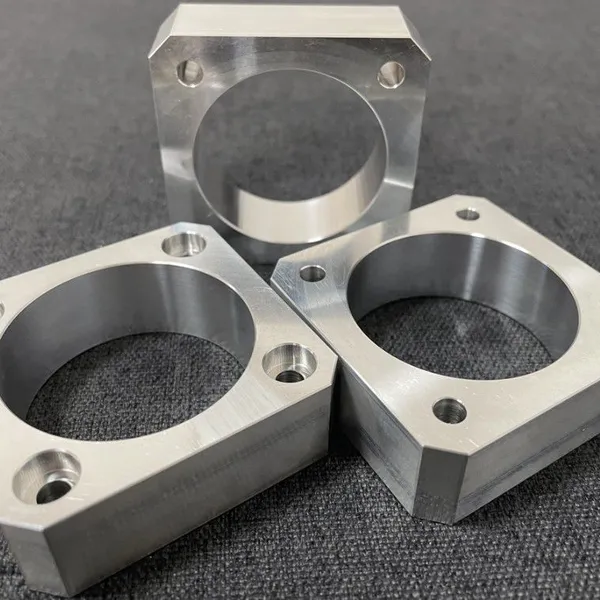 Read More
-
Reading a Casting Drawing: Draft Angles, Allowance and Datums
November 17, 2026A bearing housing arrived at a machine shop with a drawing that held the bore to 0.03 mm and gave no datum. The shop picked the as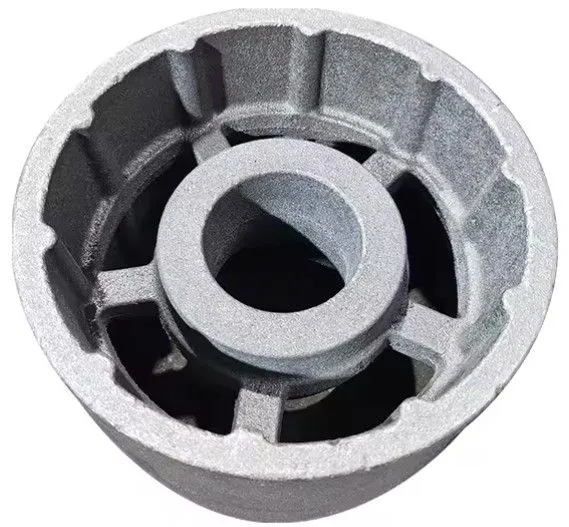 Read More
-
What Are Casting Parts? Sand, Investment and Die Cast Routes
November 16, 2026A casting is a part shaped by pouring liquid metal into a cavity. Three routes do that in three different ways: green sand uses a
Read More -
Brass Parts Surface Finishing: From As-Machined to Nickel Plated
November 16, 2026A box of brass fittings arrived with a finish the buyer had not asked for and did not want. Half the parts were bright and half we Read More

Contact Us
Recommended Products
-
 Custom CNC Machining for Aluminum and Metal Parts – OEM and ODM SolutionsNegotiableMOQ: 200 Pieces
-
CNC Machining Service for Automotive Brass Fittings With 0.8μm Surface FinishNegotiableMOQ: 500 Pieces
-
CNC Machining Service for Hydraulic System Components in Carbon SteelNegotiableMOQ: 500 Pieces
-
High-Tolerance CNC Milling Parts Titanium/Stainless Steel With Smooth Finish for Aerospace Industry ApplicationsUS$ 14MOQ: 10 Units
-
Compatible CNC Machining Service for CAD Files and Various Material TypesUS$ 12MOQ: 10 Units


-
Durable CNC Aluminum Alloy Milling Parts With Anodized Finish for Electronics and Robotics EnclosuresUS$ 12MOQ: 10 Units
-
CNC Machining Service for Industrial Robotics Aluminum Alloy PartsNegotiableMOQ: 500 Pieces
-
Professional CNC Machining Services for Aluminum, Steel, and Plastic Components With Custom SizesNegotiableMOQ: 10 Units
-
Small-Scale CNC Machining Precision Metal Parts With Tight Tolerances for RoboticsUS$ 12MOQ: 10 Units
-
5-Axis CNC Milling and Turning Services for Rapid Prototyping of Metal and Alloy PartsNegotiableMOQ: 200 Pieces


-
CNC Machining Precision Metal Parts With Fast Delivery for Prototyping and ProductionUS$ 12MOQ: 10 Units
-
Medical Grade CNC Machining Precision Metal Parts for Surgical DevicesUS$ 14MOQ: 10 Units
-
Custom CNC Machining Precision Metal Parts in Multiple Sizes and MaterialsUS$ 14MOQ: 10 Units
-
CNC Machining Service for Automotive Applications: Engine Parts and Mounting BracketsUS$ 12MOQ: 10 Units
-
Hot Selling CNC Milling Turning Customized Metal CNC Machining Services Non-standard Parts Turning Milling Composite ProcessingUS$ 10MOQ: 10 Units


-
High Grade Wholesale CNC Machining Precision Metal Parts Oem Odm Customized Aluminum Alloy Milling PartsUS$ 11MOQ: 10 Units
-
CNC Milling Parts Stainless Steel/Aluminum Alloy Compatible With CNC Machines for High-Accuracy Industrial FabricationUS$ 14MOQ: 10 Units
-
Precision CNC Milling Parts Aluminum/Steel/Brass in Various Sizes for Industrial Applications & Machinery FabricationUS$ 14MOQ: 10 Units
-
Lightweight CNC Aluminum Alloy Milling Parts Optimized for Energy-Efficient Machinery and EquipmentUS$ 12MOQ: 10 Units
-
Factory Direct Sale OEM Precision Casting Forging Service CustomizedNegotiableMOQ: 10 Pieces


