
 Business License

304 vs 316 Stainless Hardware: Chloride Resistance and Cost
Four hundred stainless brackets were fitted in a dairy plant and 26 of them were pitted within seven months. The brackets were 304, the washdown used a chlorinated alkaline detergent, and the specification sheet had said stainless without a grade.
The replacement set was 316 and cost about 28 percent more per piece. Against that, the change avoided a second shutdown, a second set of brackets and a conversation with the hygiene auditor, which together cost several times the difference.
The 304 vs 316 stainless hardware question is decided by the cleaning chemistry rather than by the washdown itself, and the notes below give the numbers behind that decision.
1. 304 vs 316 Stainless Hardware: Two Percent of Molybdenum
In 304 vs 316 stainless hardware the two grades are close relatives. Both are austenitic, both are non-magnetic in the annealed condition, and both are welded and machined with similar tooling. The difference is that 316 carries 2 to 3 percent molybdenum, and 304 carries none.
For Changfeng Mechanical the grade decision starts with the cleaning chemical rather than the alloy table. Molybdenum stabilises the passive layer against chloride. It does not make the steel immune, and it raises the concentration and the temperature at which pitting starts by a useful factor rather than by an order of magnitude.
Carbon content adds a second distinction. The L versions, 304L and 316L, hold carbon at 0.03 percent or below, which reduces carbide precipitation at a weld and keeps the heat affected zone corrosion resistant. For a welded bracket, the L grade matters as much as the molybdenum.
2. Chloride Resistant Hardware: What the Molybdenum Does
Chloride resistant hardware relies on a passive film that repairs itself. Chloride ions attack that film at weak points, and where the film breaks the metal dissolves faster than it can repassivate, which is a pit.
Molybdenum slows the breakdown and helps the film repair. In practice a 316 part tolerates roughly five times the chloride concentration of a 304 part at ambient temperature, which is the difference between a plant using potable water and a plant using a chlorinated foam.
Crevices are where the grade argument is lost. A washer that traps liquid, a thread root or a gap between two plates holds water with no oxygen, and the passive film cannot repair in that condition. Chloride resistant hardware still pits in a crevice, which is why the washer and the joint design belong in the same decision as the alloy.
The passive film also needs help. A machined surface carries embedded iron from tooling, and that iron rusts on a 316 part as readily as on a 304 part. Passivation after machining removes it, and it is the step most often skipped on hardware that pits in the first year.
3. Where 304 Stainless Hardware Is Still the Right Buy
304 stainless hardware remains the correct choice in a long list of duties. Indoor machine guards, dry conveyors, structural brackets in a clean room and components that see potable water at ambient temperature all sit inside its range.
The condition is that the part stays dry or sees low chloride. A 304 bracket on an indoor frame that is wiped rather than washed will outlast the machine, and paying 28 percent more for 316 on that bracket buys nothing.
A coastal site behaves like a washdown that never stops. Salt settles on a surface, the night humidity dissolves it, and the part sees a chloride film every day for years. At Ningbo Changfeng Mechanical Factory a part bound for a coastal plant is quoted in 316 even when the drawing asks for 304, and the difference is raised before the order rather than after the claim.
The trap is a room that is dry on the drawing and wet in service. A packaging hall washed once a week with a chlorinated foam is a wet environment, and the brackets that fail are usually the ones nobody classified as washed.
4. Stainless Grade Cost Difference: Bar, Scrap and Cycle
The stainless grade cost difference is mostly alloy content. Molybdenum is an expensive addition and nickel runs higher in 316, so bar stock typically costs 20 to 35 percent more per kilogram, with the figure moving with the alloy surcharge.
Machining adds a smaller term. 316 work hardens slightly faster and cuts a little tougher, so tool life falls by roughly 10 to 15 percent on the same program. That is a real cost on a high volume part and a minor one on a bracket.
Scrap value tracks the bar price, so the recovery on swarf is proportionally higher for 316. On a part that removes most of its stock, the net material difference is smaller than the bar price suggests.
A stainless grade cost difference of 25 percent is easier to judge as a number per year than per kilogram. On a bracket that costs 3.20 in 304, the upgrade is 80 cents, and one service call to replace a pitted set costs more than every bracket in the plant. That arithmetic, rather than the bar price, is what decides the order.
Where the volume justifies it, a duplex grade such as 2205 offers higher chloride resistance than 316 at a price between the two, with a yield strength roughly double. It machines less easily and welds differently, so it is a decision for a engineer rather than a substitution.
5. PREN: The Number Behind Chloride Resistant Hardware
The pitting resistance equivalent number condenses the chemistry into one figure. It is calculated as chromium plus 3.3 times molybdenum plus 16 times nitrogen, and it ranks alloys against each other rather than predicting a service life.
304 lands around 18 to 19, and 316 around 24 to 26. A duplex grade reaches the low 30s and a super duplex above 40, which is why the ranking is used to shortlist rather than to approve.
Salt spray testing is often quoted as proof and it proves less than buyers expect. A neutral salt spray run to a standard chamber method ranks two coatings or two passes, and it does not reproduce a chlorinated detergent at 60 °C. Changfeng Mechanical Factory treats a salt spray hour count as a screening result and asks for the chemistry of the actual cleaning cycle.
The number is a guide to pitting, and it says nothing about stress corrosion cracking, which is the failure mode that surprises buyers at temperature. A high PREN alloy can still crack under chloride and tensile stress in the wrong temperature band.
6. Temperature and Time in Chloride Resistant Hardware
Temperature changes the answer more than concentration does, and more than the stainless grade cost difference does. A 304 part that survives 200 mg/L of chloride at 20 °C may pit at 60 °C in the same water, because the pit initiation rate rises steeply with temperature.
Above about 60 °C, chloride stress corrosion cracking becomes the dominant risk for the austenitic grades. It needs three things together: chloride, tensile stress and temperature, and a cold formed or tightly bolted part supplies the stress without anyone noticing.
Stress is the variable a buyer can control. A cold formed bend, a press fit or an over-torqued bolt all leave residual tensile stress in the part, and that stress is what a crack needs to start. Annealing after forming, or a design that does not load the bend, removes the third leg of the cracking triangle.
Contact time is the third variable. A part that dries between washes accumulates a concentrated chloride film as the water evaporates, and the concentration at the surface can be many times the concentration in the detergent. That is why a rinse step matters as much as the grade.
7. 304 vs 316 Stainless Hardware: A Comparison Table
The table sets out the stainless grade cost difference and the corrosion figures a specification has to answer, with the duplex option shown for reference.
| Point | 304 / 304L | 316 / 316L | 2205 duplex |
|---|---|---|---|
| Molybdenum | None | 2 to 3 percent | About 3 percent |
| PREN | 18 to 19 | 24 to 26 | Low 30s |
| Chloride tolerance at 20 °C | Moderate, around 200 mg/L | Higher, around 1,000 mg/L | Higher again |
| Chloride cracking above 60 °C | At risk | At risk, later | Much lower risk |
| Bar price, relative | 1.00 | 1.20 to 1.35 | 1.30 to 1.50 |
| Machinability | Reference | 10 to 15 percent lower tool life | Lower again, gummy |
| Typical use | Dry, potable, indoor | Food washdown, coastal, chemical | Brine, offshore, hot chloride |
8. A Case: Chloride Resistant Hardware That Failed in 304
The brackets described at the top were 60 by 40 mm, 3 mm thick, laser cut and bent, holding a guard panel in a dairy filling hall. They were specified as stainless with no grade, and the fabricator used 304 sheet because it was in stock.
The washdown ran twice a shift with a chlorinated alkaline foam at 55 °C, followed by a rinse. Pits appeared at the bend radius and under the bolt heads, which are the two places where the passive film is weakest and where liquid stays longest.
The replacement used 316L sheet at the same thickness, with a passivation step after bending and a sealed washer under each bolt. Cost rose 28 percent per bracket and the pitting stopped, with no pits found at the eighteen month inspection.
Changfeng Mechanical now asks for the cleaning chemical before quoting a stainless part, since the stainless grade cost difference is small against a second shutdown, since the grade follows the chemistry rather than the word stainless on the drawing.
9. Writing 304 vs 316 Stainless Hardware on a Drawing
Write the grade and the carbon level. 316L is a specification, while 316 leaves the carbon to the mill and the weldability to chance.
Write the finish and the passivation. A machined or bent part needs the embedded iron removed, and a note reading passivated to a recognised standard is the line that gets it done.
Mark the grade on the part where the size allows. A small 316 stamp or a laser mark on a bracket lets an inspector confirm the alloy without a certificate, and it stops a mixed crate from becoming a mixed installation. Ningbo Changfeng Mechanical marks the grade and the heat on every stainless part above 20 mm.
Write the cleaning duty. One sentence naming the detergent type, the concentration and the temperature explains the grade to every supplier who quotes the part, and it stops a later substitution that looks harmless on paper.
10. Frequently Asked Questions on Chloride Resistant Hardware
10.1 Is 316 worth the extra cost over 304?
In a washed or coastal environment, usually yes, because the alternative is a replacement set plus the labour and the downtime. In a dry indoor duty, usually not, since 304 will outlast the equipment. The decision turns on the cleaning chemistry rather than on the room, so ask what the part will be washed with before comparing the two bar prices. A single chloride reading from the plant water is often enough to settle the question, and it costs nothing to take.
10.2 Does 316 ever pit?
Yes, at higher chloride concentrations, at higher temperatures, and wherever a crevice holds stagnant liquid. A 316 part under a plain washer in a chlorinated wash can pit while the exposed surface stays clean, and the pit stays invisible until the washer comes off and the joint is opened. Passivation, a sealed washer and a geometry that drains all matter as much as the grade. The failure usually starts where two surfaces meet rather than on the open face of the part.
10.3 What is the difference between 316 and 316L?
The carbon content, at 0.08 percent for 316 and 0.03 percent for 316L. The lower carbon reduces carbide precipitation at a weld, which keeps the heat affected zone from becoming the place where corrosion starts. That zone is often the thinnest part of a welded design, so it is the first place a pit will show. For welded hardware the L grade is the safer specification and the price difference is small, while a part that is welded and then pickled finishes more evenly in the low carbon grade.
10.4 Can a pitted 304 part be repaired?
Rarely in a way that lasts. A pit can be ground out and the surface repassivated, and the repair usually leaves a thinner section and a fresh site for the next pit. Where the cause is the cleaning chemistry, the part will pit again in the same place, which is why the grade change is the cheaper answer once pitting has started. Replace the affected set and change the specification, rather than repairing the parts that failed in service this season.
Recently Posted
-
Sourcing Casting Parts from China: Tooling, MOQ and Lead Time
November 27, 2026A buyer in Belgium requested quotes for a 4 kg grey iron bracket at 300 pieces a year and received five answers ranging from 12.50 Read More
-
Buying Brass Parts from China: A Purchaser's Checklist
November 27, 2026A distributor placed 2,400 brass fittings with a supplier who had quoted well, sampled well and shipped the first two lots on time Read More
-
Gate vs Globe Valve Bodies: Casting Design Differences
November 27, 2026Two valve bodies sat side by side on a bench, both DN80, both Class 150, both in the same cast iron. One was a straight tube with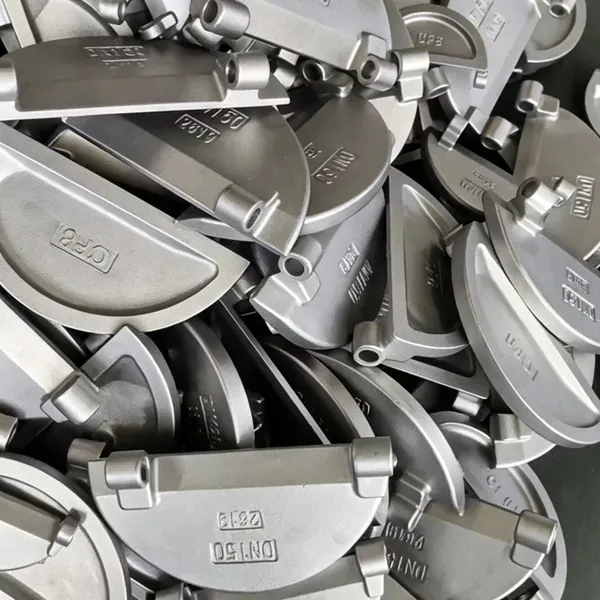 Read More
-
Bronze vs Stainless Valve Casting Parts: Media Compatibility
November 26, 2026Six bronze gate valves on a desalination pre-treatment line were replaced twice in fourteen months. The bodies had not corroded th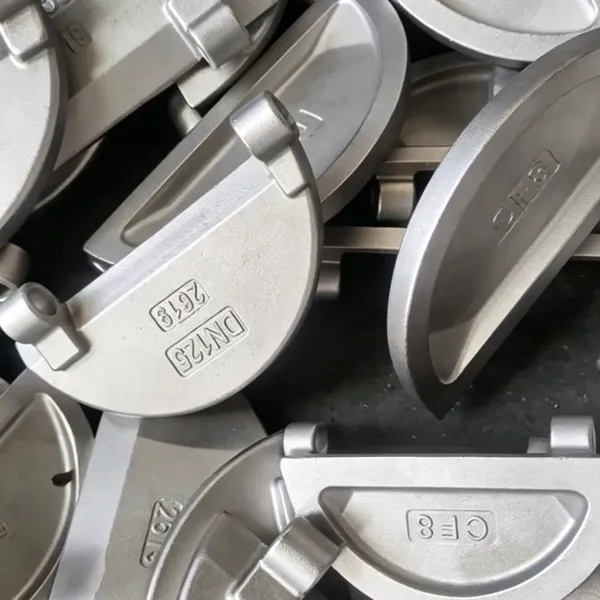 Read More

Contact Us
Recommended Products
-
 Custom CNC Machining for Aluminum and Metal Parts – OEM and ODM SolutionsNegotiableMOQ: 200 Pieces
-
CNC Machining Service for Automotive Brass Fittings With 0.8μm Surface FinishNegotiableMOQ: 500 Pieces
-
CNC Machining Service for Hydraulic System Components in Carbon SteelNegotiableMOQ: 500 Pieces
-
High-Tolerance CNC Milling Parts Titanium/Stainless Steel With Smooth Finish for Aerospace Industry ApplicationsUS$ 14MOQ: 10 Units
-
Compatible CNC Machining Service for CAD Files and Various Material TypesUS$ 12MOQ: 10 Units
-
Durable CNC Aluminum Alloy Milling Parts With Anodized Finish for Electronics and Robotics EnclosuresUS$ 12MOQ: 10 Units
-
CNC Machining Service for Industrial Robotics Aluminum Alloy PartsNegotiableMOQ: 500 Pieces
-
Professional CNC Machining Services for Aluminum, Steel, and Plastic Components With Custom SizesNegotiableMOQ: 10 Units
-
Small-Scale CNC Machining Precision Metal Parts With Tight Tolerances for RoboticsUS$ 12MOQ: 10 Units
-
5-Axis CNC Milling and Turning Services for Rapid Prototyping of Metal and Alloy PartsNegotiableMOQ: 200 Pieces
-
CNC Machining Precision Metal Parts With Fast Delivery for Prototyping and ProductionUS$ 12MOQ: 10 Units
-
Medical Grade CNC Machining Precision Metal Parts for Surgical DevicesUS$ 14MOQ: 10 Units
-
Custom CNC Machining Precision Metal Parts in Multiple Sizes and MaterialsUS$ 14MOQ: 10 Units
-
CNC Machining Service for Automotive Applications: Engine Parts and Mounting BracketsUS$ 12MOQ: 10 Units
-
Hot Selling CNC Milling Turning Customized Metal CNC Machining Services Non-standard Parts Turning Milling Composite ProcessingUS$ 10MOQ: 10 Units
-
High Grade Wholesale CNC Machining Precision Metal Parts Oem Odm Customized Aluminum Alloy Milling PartsUS$ 11MOQ: 10 Units
-
CNC Milling Parts Stainless Steel/Aluminum Alloy Compatible With CNC Machines for High-Accuracy Industrial FabricationUS$ 14MOQ: 10 Units
-
Precision CNC Milling Parts Aluminum/Steel/Brass in Various Sizes for Industrial Applications & Machinery FabricationUS$ 14MOQ: 10 Units
-
Lightweight CNC Aluminum Alloy Milling Parts Optimized for Energy-Efficient Machinery and EquipmentUS$ 12MOQ: 10 Units
-
Factory Direct Sale OEM Precision Casting Forging Service CustomizedNegotiableMOQ: 10 Pieces