
 Business License

Buying Brass Parts from China: A Purchaser's Checklist
A distributor placed 2,400 brass fittings with a supplier who had quoted well, sampled well and shipped the first two lots on time. The third lot arrived with thread depths 0.6 mm short across the whole batch, because the work had moved to a second workshop mid-order and nobody had re-checked the setup. The distributor paid for sorting in three warehouses and lost the account.
Buying brass parts from China is a supply chain decision more than a price decision. The failure modes are rarely about the machine tool; they are about whose workshop ran the job, which alloy arrived from the mill, and what document travelled with the pallet. The checklist below is the one we hand to buyers who ask what to verify before placing a first order.
1. Why Buy Brass Parts from China at All
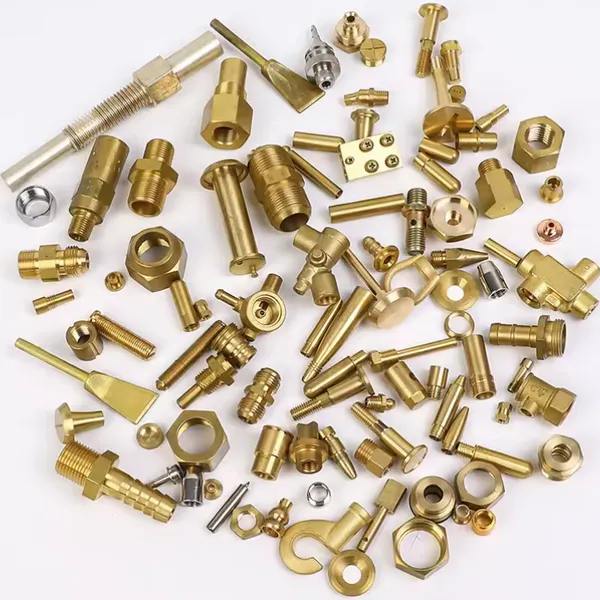
The honest reason is cost and capacity together, and most buyers who buy brass parts from China start from a specific part with a price target rather than a strategy. Brass machining is labour sensitive at the finishing and inspection end, and Chinese shops carry a density of bar stock, plating and heat treatment within a short drive that keeps logistics simple.
Ningbo and the surrounding region, where the works of Ningbo Changfeng Mechanical sit, holds a cluster of foundries, bar suppliers and surface treatment shops that lets a job move between processes in days rather than weeks. That is the practical advantage, and it is worth more than a headline hourly rate.
The second reason is range. A buyer sourcing brass fittings, stainless hardware and cast components can place all three with one supplier who already runs the inspection paperwork, which cuts the number of relationships to manage.
The cost of that convenience is distance. A defect found at incoming inspection in Ohio or Rotterdam is expensive to resolve, so the checklist matters more than it would with a domestic supplier you can visit in an afternoon.
2. The Brass Parts Supplier Checklist: Ten Checks
At Ningbo Changfeng Mechanical Factory we run a ten-item screen on new enquiries. Ten items separate a supplier who can hold a brass part from one who can quote it. Each is verifiable before an order is placed, and each has a failure story behind it.
| Check | What to verify | Why it matters |
|---|---|---|
| Business scope | Manufacturer rather than trader | Trader adds a handoff where specification changes |
| Certification | ISO certificate with a valid scope and date | A certificate for another product line proves nothing |
| Machining base | Own lathes or a named, audited partner | Untracked subcontracting is where lots drift |
| Material source | Bar supplier and alloy certificate | Alloy substitution is the classic brass failure |
| Inspection equipment | CMM, gauges, hardness tester on site | No equipment means no in-process control |
| First article process | Written FAI report, not photos | Photos cannot show a 0.02 mm deviation |
| Plating partner | Named finisher with thickness reports | Plating defects appear weeks after shipment |
| Packing standard | Counted, bagged, moisture protected | Bulk packing produces transit damage and disputes |
| Reference orders | Two buyers who will answer email | Verifiable repeat business is the strongest signal |
| Response behaviour | Technical answers, not just prices | Whoever answers the RFQ is who you will deal with |
A brass parts supplier checklist is not a scoring exercise. One failed item is enough to walk away from, and the two that matter most are material source and subcontracting control, because everything else can be inspected at the end.
3. Reading a Custom Brass Parts Quotation
A custom brass parts quotation should arrive with six lines: material, setup, cycle time, finishing, inspection and packing. A single all-in figure is not a quotation, it is an estimate with a decimal point.
Material is priced per kilogram plus a cut charge, and the alloy grade should be named rather than described. "Brass" is not a specification; C36000 or C37700 is.
Setup covers programming and first article, and it is charged once. Its size tells you something about the shop: a setup charge of a few hundred dollars on a simple fitting suggests a fixture already exists for that part family.
Watch the finishing line especially. Plating is usually subcontracted with a minimum lot charge, so a 200-piece order can carry the same plating cost as a 2,000-piece order. That single line often explains a price gap between two suppliers quoting the same drawing.
4. What a Brass Parts Supplier Checklist Misses
Two things sit outside the standard checklist and cause a disproportionate share of problems. The first is subcontracting without notification, and the second is the material certificate's actual content.
Subcontracting is normal and acceptable when it is declared. It becomes a risk when a shop takes an order beyond its capacity and moves part of the run to a partner with different equipment. Dimensions drift between the two sources, and the drift appears at assembly.
The certificate issue is more subtle. A mill certificate that lists an alloy family without a copper range cannot prove the grade. For brass, the copper percentage is the discriminating number, and a certificate without it is a receipt rather than a test report.
Both are addressed with one clause in the purchase order: any change of manufacturing location requires written approval, and the material certificate must state chemistry by element. That clause costs nothing and closes the two largest gaps.
5. Sampling Before You Buy Brass Parts from China
Sampling is where a buyer gets the most value per dollar. A first article from the production setup, measured and reported, reveals more than three rounds of email.
Ask for 10 to 30 pieces from the first production run rather than hand-finished samples. Hand samples are made by the person who will not make the production parts, on a machine that may not run the order.
The report should come with the samples: dimensions against the drawing, material grade with chemistry, plating thickness where relevant and a note on any deviation. A supplier who cannot produce that report before an order will not produce one after.
If you buy brass parts from China for the first time, budget six to eight weeks from sample approval to a production lot at your door, and treat that window as a planning figure rather than a promise. Rushing that window is how buyers end up accepting a lot they should have rejected.
6. Incoterms and the Custom Brass Parts Quotation
Incoterms decide where cost and risk transfer, and a custom brass parts quotation without a named term is incomplete in a way that surfaces at the port. For small fittings, freight is often a larger share of landed cost than the machining.
FOB is the usual term for a first order, because it puts the supplier in charge of export clearance and leaves the buyer in control of the forwarder. CIF is convenient but hides the freight line inside the price, which makes later comparison difficult.
DDP looks simplest and carries the most risk for a buyer, because the supplier chooses the customs route and the duty treatment. Some suppliers handle it well; others discover a classification problem at the port.
Whatever the term, ask for the gross weight and carton dimensions with the quotation. Without them, the freight estimate you receive from a forwarder is a guess, and the landed cost comparison between two suppliers becomes meaningless.
7. A 2,400-Piece Order That Failed on Alloy Substitution
A European distributor ordered 2,400 brass hose fittings in C36000 with a nickel finish. The supplier's quotation named "brass" in the material line, and the drawing named C36000, which the buyer assumed settled it.
The first two lots passed. The third lot showed 3 percent leakage at the customer's pressure test, with thread flanks torn on the internal thread. Hardness testing on the lot came back at 78 HRB against 65 HRB on the approved sample.
The cause was a forging grade, C37700, bought because the bar was cheaper that month. It machines at a lower index, taps with more tearing and produces a different hardness. Nothing about the parts looked different, and every dimension on the drawing was in tolerance.
The resolution cost the supplier the lot and the buyer four weeks. The permanent fix was procedural rather than technical: the purchase order now requires the alloy designation and copper range on every mill certificate, and a hardness check on the first piece of every lot.
8. Payment Terms in a Custom Brass Parts Quotation
Payment terms are a risk tool, and the common structure behind a first custom brass parts quotation is a 30 percent deposit with the balance against documents. That split is reasonable for a first order and becomes negotiable once a supply history exists.
For orders above roughly USD 20,000, a letter of credit costs a fraction of a percent and removes most of the counterparty risk. The paperwork is tedious and the protection is real.
Never pay the balance before an inspection release on a first order. An independent inspection at the supplier's works costs a few hundred dollars and catches the problems that are cheap to fix before the container leaves. That single step is the most effective protection available the first time you buy brass parts from China.
At Changfeng Mechanical we work with the deposit and balance structure on new accounts and move to net terms once a customer has run several lots, which is the sequence most buyers expect.
9. Documents to Collect When You Buy Brass Parts from China
The document set is short, and collecting it at shipment is far easier than reconstructing it later. Commercial invoice, packing list and bill of lading are the baseline.
Add the material certificate with chemistry, an inspection report against the drawing, and a plating thickness report if the part is finished. For markets with lead restrictions, add a declaration of lead content, since brass is exactly the material where that question gets asked.
Keep the documents attached to the lot number rather than to the invoice number, whether the shipment holds one part or ten. When a customer reports a problem six months later, the lot number is the field that leads back to a certificate.
Changfeng Mechanical Factory ships that package with every lot, including the inspection report signed against the drawing revision, because a report without a revision reference cannot be matched to what was actually made.
10. Frequently Asked Questions on the Brass Parts Supplier Checklist
10.1 How do I verify a supplier actually machines the parts?
Ask for a video walk-through of the machine running your part, with the program number visible on the screen. It is a low-effort request that a genuine manufacturer answers in a day and a trader cannot answer at all. Follow it with a question about workholding for a specific feature, since anyone who has set the job up will describe the fixture without hesitation. A brass parts supplier checklist that skips this step will eventually place an order with a broker who is subcontracting the work to an unknown third shop.
10.2 What is a reasonable MOQ for brass fittings?
Between 200 and 500 pieces for a machined fitting with no new tooling, and higher if plating is involved because the finisher applies a minimum lot charge. Below 200 pieces, setup dominates the piece price and the supplier is effectively selling machine time. If a first order has to be small, ask what the next quantity break is and whether the plating can be batched with another job. A supplier who cannot explain the MOQ in those terms is quoting from a price list.
10.3 Should I use a trading company or a factory?
A factory gives you direct control of the process and a single point of accountability, which matters on a part with tight tolerances or a plating requirement. A trading company can be useful when you need several unrelated parts from different processes consolidated into one shipment, since that coordination has real value. The risk with a trader is specification drift, because the technical conversation passes through someone who may not read drawings. Either way, apply the same brass parts supplier checklist and insist on knowing which workshop runs the job.
10.4 How much should I budget for freight on brass parts?
Brass is dense, so freight is usually calculated on weight rather than volume, and a pallet of fittings can be heavier than it looks. For a 500 kg shipment from Ningbo to a European port, sea freight typically lands between USD 180 and 400 depending on the season, with air freight ten to twenty times higher. Ask for gross weight with the quotation and compare landed cost rather than FOB price. On small urgent lots, the freight can exceed the machining cost by a wide margin.
Recently Posted
-
Sourcing Casting Parts from China: Tooling, MOQ and Lead Time
November 27, 2026A buyer in Belgium requested quotes for a 4 kg grey iron bracket at 300 pieces a year and received five answers ranging from 12.50 Read More
-
Gate vs Globe Valve Bodies: Casting Design Differences
November 27, 2026Two valve bodies sat side by side on a bench, both DN80, both Class 150, both in the same cast iron. One was a straight tube with Read More
-
Bronze vs Stainless Valve Casting Parts: Media Compatibility
November 26, 2026Six bronze gate valves on a desalination pre-treatment line were replaced twice in fourteen months. The bodies had not corroded th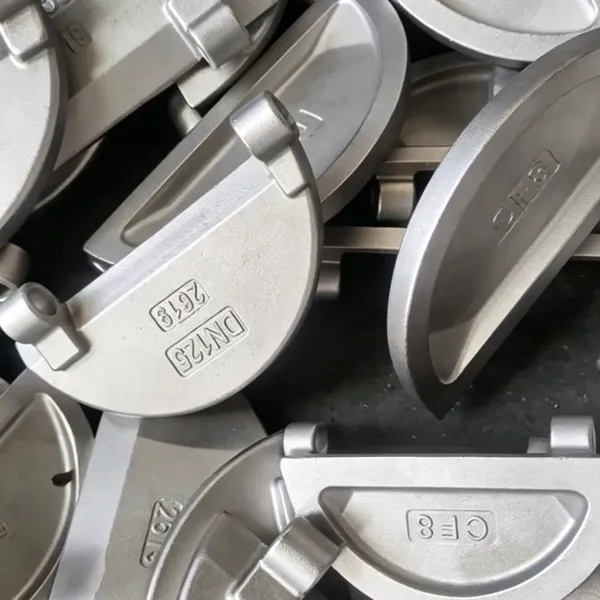 Read More
-
Machined vs Cold Formed Stainless Hardware
November 26, 2026A fastener buyer compared two quotes for the same M6 stainless screw and found a gap of forty percent. The higher quote came from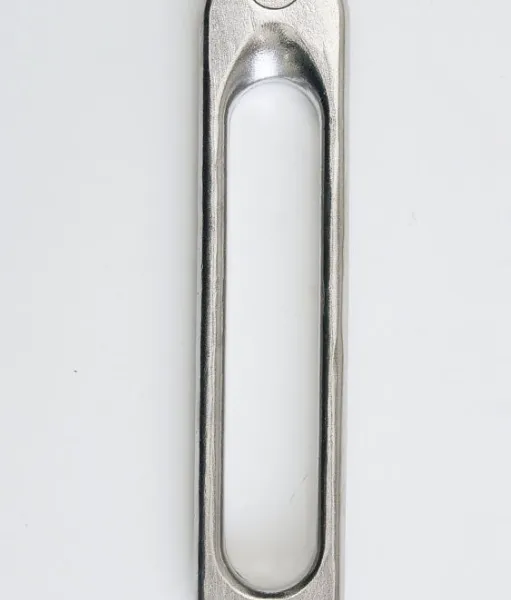 Read More

Contact Us
Recommended Products
-
 Custom CNC Machining for Aluminum and Metal Parts – OEM and ODM SolutionsNegotiableMOQ: 200 Pieces
-
CNC Machining Service for Automotive Brass Fittings With 0.8μm Surface FinishNegotiableMOQ: 500 Pieces
-
CNC Machining Service for Hydraulic System Components in Carbon SteelNegotiableMOQ: 500 Pieces
-
High-Tolerance CNC Milling Parts Titanium/Stainless Steel With Smooth Finish for Aerospace Industry ApplicationsUS$ 14MOQ: 10 Units
-
Compatible CNC Machining Service for CAD Files and Various Material TypesUS$ 12MOQ: 10 Units
-
Durable CNC Aluminum Alloy Milling Parts With Anodized Finish for Electronics and Robotics EnclosuresUS$ 12MOQ: 10 Units
-
CNC Machining Service for Industrial Robotics Aluminum Alloy PartsNegotiableMOQ: 500 Pieces
-
Professional CNC Machining Services for Aluminum, Steel, and Plastic Components With Custom SizesNegotiableMOQ: 10 Units
-
Small-Scale CNC Machining Precision Metal Parts With Tight Tolerances for RoboticsUS$ 12MOQ: 10 Units
-
5-Axis CNC Milling and Turning Services for Rapid Prototyping of Metal and Alloy PartsNegotiableMOQ: 200 Pieces
-
CNC Machining Precision Metal Parts With Fast Delivery for Prototyping and ProductionUS$ 12MOQ: 10 Units
-
Medical Grade CNC Machining Precision Metal Parts for Surgical DevicesUS$ 14MOQ: 10 Units
-
Custom CNC Machining Precision Metal Parts in Multiple Sizes and MaterialsUS$ 14MOQ: 10 Units
-
CNC Machining Service for Automotive Applications: Engine Parts and Mounting BracketsUS$ 12MOQ: 10 Units
-
Hot Selling CNC Milling Turning Customized Metal CNC Machining Services Non-standard Parts Turning Milling Composite ProcessingUS$ 10MOQ: 10 Units

-
High Grade Wholesale CNC Machining Precision Metal Parts Oem Odm Customized Aluminum Alloy Milling PartsUS$ 11MOQ: 10 Units
-
CNC Milling Parts Stainless Steel/Aluminum Alloy Compatible With CNC Machines for High-Accuracy Industrial FabricationUS$ 14MOQ: 10 Units
-
Precision CNC Milling Parts Aluminum/Steel/Brass in Various Sizes for Industrial Applications & Machinery FabricationUS$ 14MOQ: 10 Units
-
Lightweight CNC Aluminum Alloy Milling Parts Optimized for Energy-Efficient Machinery and EquipmentUS$ 12MOQ: 10 Units
-
Factory Direct Sale OEM Precision Casting Forging Service CustomizedNegotiableMOQ: 10 Pieces