
 Business License

Sourcing Casting Parts from China: Tooling, MOQ and Lead Time
A buyer in Belgium requested quotes for a 4 kg grey iron bracket at 300 pieces a year and received five answers ranging from 12.50 to 26.00 per piece. The spread was not a negotiation gap. Two suppliers had quoted a new pattern, two had quoted an existing one they owned, and one had quoted a machined-from-solid substitute.
Buying castings across borders is mostly a matter of asking the same three questions of every supplier: what the tooling covers and who owns it, what the minimum order is and why, and how many weeks sit between a purchase order and a container.
The notes below answer those three, then walk through a first order that took nineteen weeks and the two changes that would have shortened it.
1. Casting Parts Tooling Cost, MOQ and Lead Time: The Short Version
Tooling for a sand casting is a pattern and a core box, usually between 800 and 3,000 US dollars for a part of moderate size. A die casting tool is an order of magnitude higher, from about 25,000 dollars upward, because the die is cut steel rather than a shaped pattern.
The minimum order follows the tooling and the furnace. A sand foundry can pour 50 pieces economically, an investment caster usually wants 300 to 1,000, and a die caster needs 5,000 or more before the tool is amortised.
Lead time breaks into four blocks rather than one number: tooling, sample, production and freight. A realistic first order runs 12 to 20 weeks door to door, and any quote that promises six weeks is either quoting an existing tool or leaving out a block.
2. Casting Parts Tooling Cost: Pattern, Die and What It Covers
Casting parts tooling cost is quoted as a one-off and should be itemised. For sand, the items are a pattern, a core box if the part has internal cavities, a gating design and a sample pour. For investment, the item is a wax injection die plus the tree fixture. For die casting, it is the die, the trim die and the first trial shot.
Two details decide whether the number is fair. The first is whether the pattern is aluminium or wood, since an aluminium pattern lasts far longer and costs more. The second is whether the price includes a sample casting and one revision, or charges for each round separately.
Ownership matters as much as price. A tool paid for by the buyer should be the buyer's property, with a written statement of where it is stored and how it can be transferred. A supplier who keeps the pattern without saying so has leverage on every future order.
At Ningbo Changfeng Mechanical Factory the tooling line on a quotation names the material, the number of cavities, the sample allowance and the ownership clause, so two quotes can be compared on the same four items rather than on a total.
3. Casting Parts MOQ: Where the Number Comes From
For a sand foundry the casting parts MOQ is not a policy, it is an arithmetic result. It comes from the setup time on the moulding line, the smallest heat a furnace can pour without wasting metal, and the amount of inspection the order can absorb.
For sand, the constraint is usually the moulding setup rather than the metal, which is why 50 to 200 pieces is a common floor. For investment, the constraint is the shell: a tree holds a fixed number of parts, and a short run leaves positions empty while paying for the full shell cycle.
For die casting, the constraint is the tool life and the amortisation. A die that costs 40,000 dollars and produces 100,000 shots needs a volume that spreads that cost, and a 5,000 piece order carries 8 dollars of tooling in every part.
A low MOQ is negotiable when the part can share a moulding box with another part, or when the foundry has an existing pattern of similar size. Asking whether a shared tool is possible is more productive than asking for a discount on a small order. A shared tool usually moves the floor from 200 pieces to 50, which is the number most first orders actually need.
4. China Casting Supplier Lead Time: Sample, Tool, Production
China casting supplier lead time is easier to read as four dates rather than one. Tooling start to tooling finish is typically 25 to 45 days for sand and longer for a die. Sample casting and inspection takes another 7 to 15 days.
Production after sample approval runs 20 to 35 days for a sand casting, depending on the foundry load and the heat treatment. Sea freight to Europe or North America adds 30 to 40 days, and air freight is available for samples at a multiple of the cost.
The block buyers forget is the revision loop. A sample that needs a change restarts part of the tooling clock, and two revisions can add six weeks to a schedule that looked comfortable when the order was placed.
5. Reading a China Casting Supplier Lead Time Quote
A China casting supplier lead time quoted in weeks without a start point is not a commitment. Ask for the four dates explicitly: tooling complete, first sample shipped, sample approved, production complete. Each one is measurable, and each one can be written into the order.
Ask also whether the clock starts at the purchase order or at the deposit. A supplier who starts at the deposit and receives it a week late has moved the whole schedule, and the buyer usually blames the foundry rather than the payment run.
Chinese New Year is the other variable. Factories close for two to four weeks around the holiday, and an order placed in December can lose a month. Planning the shipment before the holiday, or after it, is worth more than a discount. At Ningbo Changfeng Mechanical Factory the four dates go on the order confirmation rather than staying in the quotation.
6. Payment Terms for Casting Parts Tooling Cost
Tooling is usually paid separately and earlier than production. A common arrangement is 50 percent with the order and 50 percent on sample approval, while production runs on 30 percent deposit and 70 percent before shipment.
The terms should tie the money to a milestone rather than to a date. Paying the second tooling instalment on sample approval gives the buyer a hold point, and it gives the supplier a reason to get the sample right.
A first order is also where a inspection clause earns its place. A third party inspection before shipment, paid by the buyer, costs a few hundred dollars and catches the dimensional drift that a photo cannot show.
7. Casting Parts MOQ and the Sample That Precedes It
A first order also carries a fixed cost that the quotation rarely shows: the drawing review, the sample inspection and the freight on a small volume. Budgeting for those three separately makes the casting parts tooling cost easier to judge. At Changfeng Mechanical the drawing review is quoted as a line rather than given away, because a free review is worth what was paid for it.
The sample is the real acceptance test for a casting parts MOQ decision, because it shows whether the process can hold the drawing at that volume. A sample made by a skilled moulder on a single box is not the same as the hundredth piece off a production line.
Ask for the sample to be produced on the production tool, with the production gating, and inspected against a documented dimensional report. A sample from a temporary pattern proves the shape and nothing about the process.
Then ask for the first production lot to be inspected with the same report. The gap between sample and lot is where most disputes start, and a second report closes it. Ask for both reports on the same drawing revision, since a report against an older revision proves nothing about the parts in the carton.
8. A Case: 19 Weeks for a 300-Piece Casting Parts Order
The China casting supplier lead time in this case covered a 4 kg grey iron bracket with two machined faces and a 12 mm bore. The order was placed in the first week of March for 300 pieces, and the container left in the second week of July.
The nineteen weeks broke down as follows: one week for the drawing review and quote, six weeks for the pattern, two weeks for the sample and its dimensional report, three weeks for a revision to the bore boss, and four weeks for production. Sea freight added the last three weeks.
Two changes would have saved about four weeks. A drawing review before the order, which would have caught the thin boss that caused the revision, and a sample approval against a dimensional report rather than a photograph.
The tooling cost was 1,650 dollars for an aluminium pattern and a core box, paid 50 percent at the order and 50 percent at sample approval. Changfeng Mechanical now sends a drawing review note with every quotation, listing the features that are likely to need a revision.
9. Reducing Risk on Casting Parts Tooling Cost
Pay for a drawing review before the tool is cut. A foundry engineer who marks three features as risky is cheaper than a revision after the first sample, and the review usually takes a week.
Split the tooling payment across milestones and keep the pattern ownership in writing. A tool that belongs to the buyer can be moved to a second supplier, which changes the conversation on every later price.
Order the first lot with a machining allowance and machine at home if the tolerance is tight. Casting to a near-net shape saves freight and metal, and it also removes the buffer that absorbs a foundry's normal variation.
10. Frequently Asked Questions on Casting Parts MOQ and Lead Time
10.1 Why is the minimum order 300 pieces when I need 50?
Because for a casting parts MOQ the moulding setup, the smallest heat and the inspection cost are spread over the order, and at 50 pieces those fixed costs dominate. A foundry can often run 50 if the part shares a moulding box with another job, or if an existing pattern is close enough to modify. Ask for a small-batch price with the setup shown separately, and the number stops looking arbitrary. The gap between 50 and 300 is usually the setup, and a shared moulding box removes most of it.
10.2 Who owns the tooling after the order is finished?
The buyer, if the buyer paid for it, and that should be written into the purchase order rather than assumed. The clause should name the tool, its location, the conditions for transfer and who pays the freight if it moves. A supplier who declines to state ownership is telling you something about the next quotation. Ask for the pattern location and a photograph of it, and record both in the file while the order is live rather than after it ends.
10.3 Can the lead time be shortened by paying more?
Sometimes, and usually not by much. A deposit paid immediately, a drawing review done in advance and a sample approved against a report can each save a week or two. What cannot be compressed is the tooling and the furnace schedule, and a supplier who promises a four-week first order is either using an existing tool or planning to send a machined substitute. A China casting supplier lead time that looks too short is worth a question about which route the part will take.
10.4 What documents should come with the first shipment?
A material certificate with chemistry and mechanical results, a dimensional report with the measured values rather than pass marks, a radiograph or test bar result where the order calls for one, and a packing list that matches the cartons. For a first order, add a first article inspection report that ties the measured part to the drawing revision. Those five documents are what a quality audit asks for first, and a supplier who sends them without being chased is usually the one worth keeping.
Recently Posted
-
Buying Brass Parts from China: A Purchaser's Checklist
November 27, 2026A distributor placed 2,400 brass fittings with a supplier who had quoted well, sampled well and shipped the first two lots on time Read More
-
Gate vs Globe Valve Bodies: Casting Design Differences
November 27, 2026Two valve bodies sat side by side on a bench, both DN80, both Class 150, both in the same cast iron. One was a straight tube with Read More
-
Bronze vs Stainless Valve Casting Parts: Media Compatibility
November 26, 2026Six bronze gate valves on a desalination pre-treatment line were replaced twice in fourteen months. The bodies had not corroded th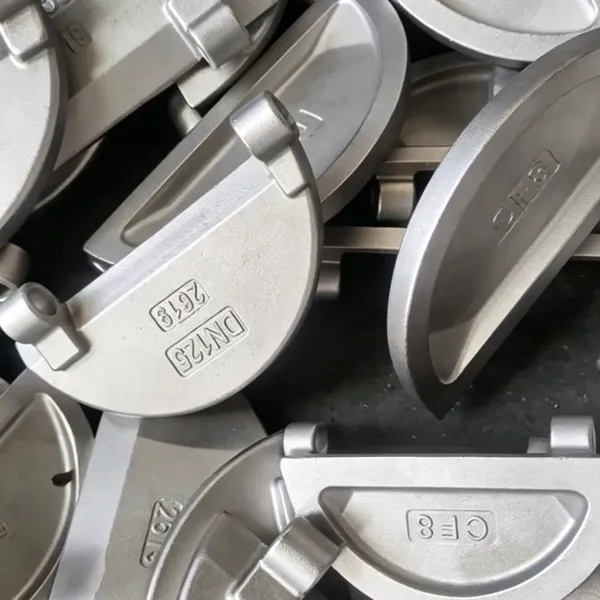 Read More
-
Machined vs Cold Formed Stainless Hardware
November 26, 2026A fastener buyer compared two quotes for the same M6 stainless screw and found a gap of forty percent. The higher quote came from Read More

Contact Us
Recommended Products
-
 Custom CNC Machining for Aluminum and Metal Parts – OEM and ODM SolutionsNegotiableMOQ: 200 Pieces
-
CNC Machining Service for Automotive Brass Fittings With 0.8μm Surface FinishNegotiableMOQ: 500 Pieces
-
CNC Machining Service for Hydraulic System Components in Carbon SteelNegotiableMOQ: 500 Pieces
-
High-Tolerance CNC Milling Parts Titanium/Stainless Steel With Smooth Finish for Aerospace Industry ApplicationsUS$ 14MOQ: 10 Units
-
Compatible CNC Machining Service for CAD Files and Various Material TypesUS$ 12MOQ: 10 Units
-
Durable CNC Aluminum Alloy Milling Parts With Anodized Finish for Electronics and Robotics EnclosuresUS$ 12MOQ: 10 Units
-
CNC Machining Service for Industrial Robotics Aluminum Alloy PartsNegotiableMOQ: 500 Pieces
-
Professional CNC Machining Services for Aluminum, Steel, and Plastic Components With Custom SizesNegotiableMOQ: 10 Units
-
Small-Scale CNC Machining Precision Metal Parts With Tight Tolerances for RoboticsUS$ 12MOQ: 10 Units
-
5-Axis CNC Milling and Turning Services for Rapid Prototyping of Metal and Alloy PartsNegotiableMOQ: 200 Pieces
-
CNC Machining Precision Metal Parts With Fast Delivery for Prototyping and ProductionUS$ 12MOQ: 10 Units
-
Medical Grade CNC Machining Precision Metal Parts for Surgical DevicesUS$ 14MOQ: 10 Units
-
Custom CNC Machining Precision Metal Parts in Multiple Sizes and MaterialsUS$ 14MOQ: 10 Units
-
CNC Machining Service for Automotive Applications: Engine Parts and Mounting BracketsUS$ 12MOQ: 10 Units
-
Hot Selling CNC Milling Turning Customized Metal CNC Machining Services Non-standard Parts Turning Milling Composite ProcessingUS$ 10MOQ: 10 Units

-
High Grade Wholesale CNC Machining Precision Metal Parts Oem Odm Customized Aluminum Alloy Milling PartsUS$ 11MOQ: 10 Units
-
CNC Milling Parts Stainless Steel/Aluminum Alloy Compatible With CNC Machines for High-Accuracy Industrial FabricationUS$ 14MOQ: 10 Units
-
Precision CNC Milling Parts Aluminum/Steel/Brass in Various Sizes for Industrial Applications & Machinery FabricationUS$ 14MOQ: 10 Units
-
Lightweight CNC Aluminum Alloy Milling Parts Optimized for Energy-Efficient Machinery and EquipmentUS$ 12MOQ: 10 Units
-
Factory Direct Sale OEM Precision Casting Forging Service CustomizedNegotiableMOQ: 10 Pieces