
 Business License

Heat Treatment Routes for Industrial Castings
A ductile iron lever cracked across a fillet two hours after it came out of a water quench. The casting was sound, the chemistry was inside the specification, and the quench had been chosen because the drawing asked for a hardness the foundry could reach that way.
Heat treatment on a casting is chosen for four different reasons, and they pull in different directions. Relieving stress wants a slow cooling, softening wants a slow transformation, refining a structure wants a controlled air cool, and strengthening wants a fast quench followed by a temper.
The notes below separate the four routes, set out what each one buys, and follow a case where the route was right for the property and wrong for the shape.
1. Casting Heat Treatment: The Four Purposes
Casting heat treatment answers one of four questions. Does the part need to stop moving during machining, does it need to be softer, does it need a finer structure, or does it need more strength and toughness than the as-cast condition gives.
The routes differ in temperature and in cooling rate rather than in equipment. A stress relief and an anneal may use the same furnace and the same load, and they differ in the hold and in how the load comes down, which is why a purchase order that names the temperature and leaves the cooling to the shop has left out the part that matters.
Verification follows the purpose as well. A stress relief is proved by a dimensional check after machining on a part that used to move, an anneal by hardness and a microstructure, and a quench and temper by hardness at a defined depth plus a tensile result from a coupon poured with the part. A drawing that names a hardness figure alone leaves casting heat treatment normalizing and a plain anneal looking like the same instruction.
2. Annealed Cast Components: Softening for the Cutting Tool
Annealed cast components are specified when the machining is the constraint. A ductile iron as cast can run 230 to 260 HB, and the same iron annealed to a ferritic structure sits near 160 to 190 HB, which roughly doubles the tool life on a turning operation.
Annealed cast components are usually the ones that reach a machine shop with a hardness range attached. A foundry that anneals to a range rather than to a maximum gives the shop a predictable cut, and a range is easier to hold across a heavy section than a single figure.
The cycle is a full austenitise followed by a slow cool. A ductile iron is held near 900 degrees, then cooled at 30 to 60 degrees per hour through the transformation range so the carbon has time to move to the nodules instead of staying in pearlite.
The trade is strength. An annealed ductile iron loses tensile and yield against the as-cast grade, so a part that carries load and is annealed for machinability has to be designed with that loss in mind rather than discovered at the test bar.
3. Casting Heat Treatment Normalizing: Grain and Structure
Casting heat treatment normalizing is the route for a structure that needs refining rather than softening. The part is heated into the austenitic range and cooled in still air, which produces a finer grain and a more uniform pearlite than a slow furnace cool.
Casting heat treatment normalizing is often chosen for a heavy section that cooled slowly in the mould. A coarse structure machines with a torn surface, and a normalise refines it, which shows up as a better finish at the same feed rather than as a higher hardness.
The result is a compromise between the annealed and the quenched condition. Normalizing raises strength and hardness against an anneal and leaves more toughness than a quench, and it is the usual route for a cast steel that has to meet a tensile figure without a tempering step.
It also improves machinability in some irons by breaking up a coarse as-cast structure. A heavy section that cooled slowly in the mould can carry a Widmanstatten pattern that machines badly, and a normalise removes it.
4. Quenched and Tempered Castings: Strength With Some Toughness
Quenched tempered castings are specified when a hardness or a strength figure cannot be reached any other way. The part is austenitised, quenched fast enough to miss the pearlite nose, and tempered immediately to the hardness the drawing asks for.
Quenched tempered castings carry a hardness that is set by the temper rather than by the quench. A quench that missed the structure cannot be corrected by tempering, while a part quenched correctly and tempered lower gains strength at the cost of impact resistance.
The quench is where the risk sits. A fast quench in water produces a high hardness and a high residual stress at the same time, and a casting with a section change concentrates that stress at the junction, which is where a crack starts.
The temper is not optional and it is not a formality. An untempered martensitic casting is brittle and it will crack in handling, and a delay between quench and temper is a delay in which a sound casting becomes scrap.
5. Casting Heat Treatment: Stress Relief
Stress relief is the mildest of the four and it is the one that solves the most common complaint. A casting cools unevenly in the mould, the thin sections set first and the thick ones pull against them, and the residual stress that remains is released when machining removes material from one side.
The cycle is a hold at 550 to 620 degrees, roughly two hours per 25 mm of section, followed by a furnace cool at under 50 degrees per hour. The temperature is deliberately below the transformation range so the structure and the hardness do not change.
The result is a part that stays where it is machined. A bracket that used to bow 0.1 mm after face milling holds 0.02 mm, and the cost is a furnace cycle rather than a straightening operation and a rework loop. That is also why annealed cast components are sometimes given a second stress relief after rough machining, since the two routes answer different questions.
6. Casting Heat Treatment: Choosing by Alloy and Section
The alloy narrows the choice before the section does. A grey iron responds to stress relief and to annealing and it does not respond usefully to a quench, while a ductile iron responds to all four and a cast steel is normally normalized or quenched and tempered. A part that will be cut on a transfer line is usually specified as annealed cast components for exactly that reason.
Section thickness sets the practical limit. A 100 mm section cannot be quenched fast enough in the centre to reach a martensitic structure in a low alloy steel, so a hardness figure specified for the surface will not be met at the core, and a drawing that asks for it is asking for something the geometry forbids.
The service condition decides the rest. A part that must hold a bore straight through machining wants a stress relief, a part that must resist impact wants a quench and temper, and a part that is machined on a transfer line wants an anneal so the tools last a shift. Where the drawing asks for hardness on a thick section, quenched tempered castings are specified with a depth, since a surface figure can be met by a skin and missed by the core.
7. Casting Heat Treatment: Route, Purpose and Cycle
The table sets the four routes that cover casting heat treatment normalizing, annealed cast components and quenched tempered castings against what each one changes and the cycle that produces it.
| Route | What it changes | Typical cycle | Verification |
|---|---|---|---|
| Stress relief | Residual stress, with no structural change | 550 to 620 C, 2 h per 25 mm, furnace cool | Dimension after machining |
| Full anneal | Structure to ferrite, hardness down | 880 to 900 C, cool 30 to 60 C per hour | Hardness and microstructure |
| Normalize | Finer grain, moderate strength gain | 880 to 900 C, still air cool | Tensile bar and hardness |
| Quench and temper | High strength with controlled toughness | Austenitise, quench, temper 550 to 650 C | Hardness at depth, tensile, impact |
8. A Case: Quenched Tempered Castings That Cracked
The lever was a ductile iron part of 3.2 kg with an 18 mm eye at one end and a 45 mm boss at the other. The drawing called for 240 to 280 HB, the foundry quenched it in water, and six of the first twenty cracked at the fillet between the eye and the arm.
The parts were specified as quenched tempered castings with a hardness range, and the range was reachable in water and in oil. The water quench was chosen for the lower cost and the section change was noted on the drawing without a comment.
The crack was a quench crack and not a casting defect. The water quench cooled the thin eye first, the boss stayed hot, and the fillet between them carried the whole of the thermal gradient. The section change was the stress raiser and the quench was the load.
The correction was a polymer quench with a controlled cooling rate, a temper within the hour, and a hardness specification given at a defined depth below the surface rather than as a single figure. The cracks stopped and the hardness range was still met on every part.
At Ningbo Changfeng Mechanical the heat treatment route, the quench medium and the time to temper are written on the process sheet before the first casting, because a heat treater who receives a hardness figure alone will choose the quickest route to reach it.
9. Writing a Heat Treatment Route on an Order
Name the route and the reason. A line reading stress relieved after rough machining, hold 600 degrees for four hours tells a supplier what the part needs, while a line reading heat treated leaves the route open to a supplier who will choose the one with the shortest furnace time.
A certificate that names casting heat treatment normalizing without a furnace chart is a document about a process rather than a record of a part. Ningbo Changfeng Mechanical keeps the chart with the certificate for that reason.
Name the verification. A hardness at a stated location, a tensile bar poured with the part, an impact test at a stated temperature and a microstructure requirement are four different documents, and the order should say which one applies.
Name the allowance for distortion. A quench and temper moves a casting, and a drawing that holds a machined tolerance before heat treatment and the same tolerance after it is a drawing with a conflict in it. Leave stock, treat, then finish.
Changfeng Mechanical Factory issues the heat treatment certificate with the load number on it, so a part that fails a hardness check a year later can be traced to a furnace cycle rather than to a supplier's memory. Changfeng Mechanical Factory sends the chart, the load number and the hardness readings as one package.
10. Frequently Asked Questions on Casting Heat Treatment
10.1 Which route should a machined casting have?
A stress relief before finish machining covers most cases. It is cheap, it does not change the hardness or the structure, and it removes the residual stress that makes a casting bow when material is removed from one face. A part that also needs to be softer for the tool gets an anneal, and one that needs strength gets a quench and temper before the final cut. Rough machine, treat, then finish, so the distortion happens before the last pass.
10.2 Why does a casting crack during quenching?
Because the cooling rate at the surface and at the core differ, and a section change concentrates the resulting stress at the junction. A water quench on a part with a thin eye and a heavy boss is the classic case. A polymer quench, a slower medium or an oil quench reduces the gradient, and a temper started within the hour removes the rest of the risk. A part left overnight between quench and temper is a part that may crack while nobody is watching it.
10.3 Can a grey iron be quenched and tempered?
It can be hardened at the surface and it does not respond usefully through the section. The graphite flakes act as internal notches, so a quench produces a hard skin over a brittle core and the part is worse for the treatment. A grey iron is normally stress relieved or annealed, and a part that needs strength as well as damping is better made in ductile iron. A drawing that specifies a quench on grey iron is usually a drawing copied from a steel part.
10.4 How is a stress relief verified?
By the part staying where it is machined rather than by a test on the furnace. A dimensional check before and after machining, with the readings recorded, is the evidence, and a supplier that records the furnace chart as well has the cycle to compare with it. A hardness check confirms that the temperature stayed below the transformation range. Where the part is large, mark the datum before the cycle so the before and after readings are taken from the same place.
Recently Posted
-
Ductile Iron vs Gray Iron Industrial Castings
November 25, 2026A conveyor bracket in GJL-250 passed its static proof load at three times working load and cracked in service after eleven weeks.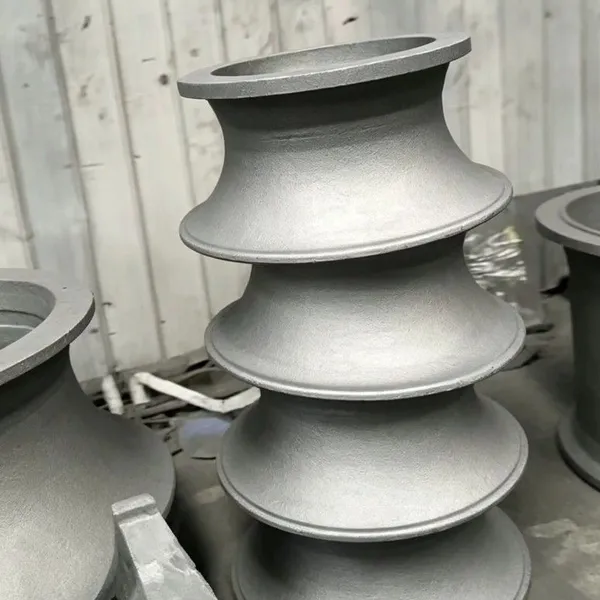 Read More
-
Bar Stock vs Billet for Turning Parts: Material Yield Compared
November 25, 2026Two quotes for the same 180 mm flange arrived with a gap of thirty percent, and both were correct. One shop had priced it from a b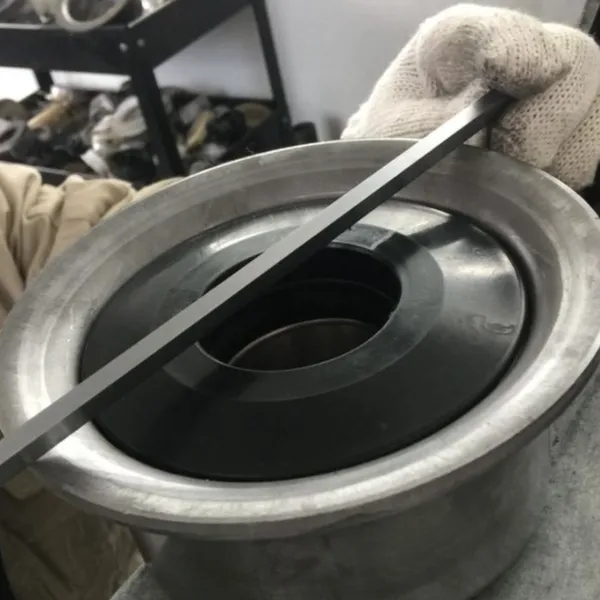 Read More
-
Swiss Turning vs Conventional Turning: Small Part Cost and Cycle Time
November 24, 2026A 4 mm pin, 40 mm long, quoted at 0.42 each from a conventional lathe and 0.26 from a sliding head machine. The part was the same,
Read More -
Aluminum vs Steel CNC Milling Parts: Cut Speed, Finish and Cost
November 24, 2026A mounting bracket was quoted at two prices, one in 6061 aluminum and one in 1045 steel, and the aluminum part came out cheaper at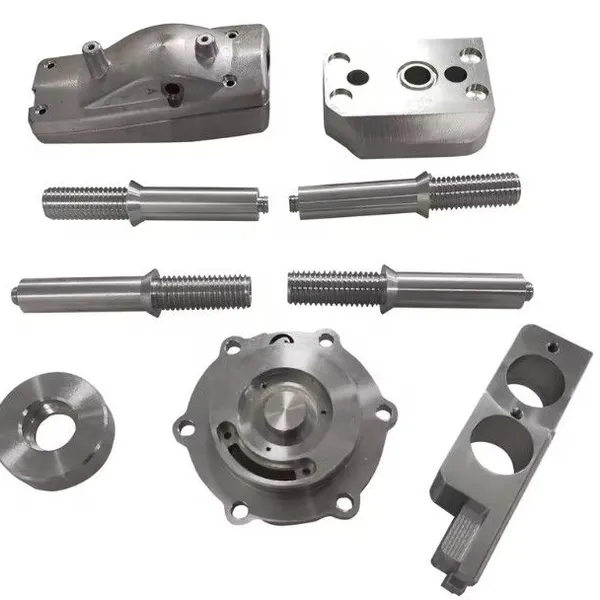 Read More

Contact Us
Recommended Products
-
 Custom CNC Machining for Aluminum and Metal Parts – OEM and ODM SolutionsNegotiableMOQ: 200 Pieces
-
CNC Machining Service for Automotive Brass Fittings With 0.8μm Surface FinishNegotiableMOQ: 500 Pieces
-
CNC Machining Service for Hydraulic System Components in Carbon SteelNegotiableMOQ: 500 Pieces
-
High-Tolerance CNC Milling Parts Titanium/Stainless Steel With Smooth Finish for Aerospace Industry ApplicationsUS$ 14MOQ: 10 Units
-
Compatible CNC Machining Service for CAD Files and Various Material TypesUS$ 12MOQ: 10 Units
-
Durable CNC Aluminum Alloy Milling Parts With Anodized Finish for Electronics and Robotics EnclosuresUS$ 12MOQ: 10 Units
-
CNC Machining Service for Industrial Robotics Aluminum Alloy PartsNegotiableMOQ: 500 Pieces
-
Professional CNC Machining Services for Aluminum, Steel, and Plastic Components With Custom SizesNegotiableMOQ: 10 Units
-
Small-Scale CNC Machining Precision Metal Parts With Tight Tolerances for RoboticsUS$ 12MOQ: 10 Units
-
5-Axis CNC Milling and Turning Services for Rapid Prototyping of Metal and Alloy PartsNegotiableMOQ: 200 Pieces
-
CNC Machining Precision Metal Parts With Fast Delivery for Prototyping and ProductionUS$ 12MOQ: 10 Units
-
Medical Grade CNC Machining Precision Metal Parts for Surgical DevicesUS$ 14MOQ: 10 Units
-
Custom CNC Machining Precision Metal Parts in Multiple Sizes and MaterialsUS$ 14MOQ: 10 Units
-
CNC Machining Service for Automotive Applications: Engine Parts and Mounting BracketsUS$ 12MOQ: 10 Units
-
Hot Selling CNC Milling Turning Customized Metal CNC Machining Services Non-standard Parts Turning Milling Composite ProcessingUS$ 10MOQ: 10 Units
-
High Grade Wholesale CNC Machining Precision Metal Parts Oem Odm Customized Aluminum Alloy Milling PartsUS$ 11MOQ: 10 Units
-
CNC Milling Parts Stainless Steel/Aluminum Alloy Compatible With CNC Machines for High-Accuracy Industrial FabricationUS$ 14MOQ: 10 Units
-
Precision CNC Milling Parts Aluminum/Steel/Brass in Various Sizes for Industrial Applications & Machinery FabricationUS$ 14MOQ: 10 Units
-
Lightweight CNC Aluminum Alloy Milling Parts Optimized for Energy-Efficient Machinery and EquipmentUS$ 12MOQ: 10 Units
-
Factory Direct Sale OEM Precision Casting Forging Service CustomizedNegotiableMOQ: 10 Pieces