


 Business License

C36000 vs C37700 Brass Parts: Machinability and Cost Compared
A fitting shop moved a family of brass adapters from C36000 to C37700 to save on material, and the piece price went up. The alloy was 2 percent cheaper per kilogram, and the cycle time rose by a fifth because the chips came off long and stringy instead of breaking.
Both grades are leaded brass, both machine well, and both appear on drawings that say "brass" without a UNS number. The difference appears when the two are priced by the finished part rather than by the bar.
The comparison below covers what each alloy is for, how the machinability index is built, and where the cost actually sits once chips, tool life and scrap are counted.
1. Brass Alloy Machinability Comparison: Two Grades, One Letter Apart
C36000 and C37700 sit next to each other in the copper alloy family and behave differently under a tool. C36000 is the free-cutting grade, designed for screw machines, with lead distributed to break the chip. C37700 is a forging grade, designed to flow under a press, with a composition that stays ductile when hot.
The practical consequence is that a brass alloy machinability comparison is not confined to cutting speed. It is about chip form, tool life, achievable finish and the number of operations a part needs before it is finished.
Neither grade is obsolete. A shop that forges a shape and then machines the critical features wants C37700, while a shop that cuts a part from bar wants C36000. Mixing the two decisions is where the cost surprises come from.
2. C36000 Brass Parts: The Free-Cutting Baseline
C36000 brass parts set the reference for machinability, and every other copper alloy is scored against it at 100. The grade carries roughly 61 to 63 percent copper, 2.5 to 3.7 percent lead and the balance zinc, and the lead sits in discrete particles that break the chip as the tool advances.
The result is short chips, low cutting force and a finish that comes off the tool at Ra 0.8 to 1.6 micrometre without a second pass. Tool life is long, and a screw machine can run the grade at high surface speed with predictable insert changes.
The limits are forming and joining. C36000 is not recommended for hot working, and it is a poor choice for a part that will be bent, swaged or forged after machining. It also carries the highest lead content of the common brass grades, which matters for drinking water and for some export markets.
At Ningbo Changfeng Mechanical Factory C36000 is the default for a turned brass part under 60 mm, because the cycle time saving against a forging grade usually outweighs the small material premium.
3. C37700 Brass Parts: Where the Lead Goes
C37700 brass parts start life as a forging. The grade carries about 58 to 61 percent copper and 1.5 to 2.5 percent lead, and the lower lead and higher zinc give it the ductility to fill a die at forging temperature without cracking.
Machinability is rated at roughly 90 against the free-cutting grade, which sounds close and is not. The chips are longer, the cutting force is higher, and a part with a deep bore or a fine thread needs more attention to chip evacuation than the same part in C36000.
The compensation is near net shape. A forged adapter arrives with the bend, the flange and the boss already formed, so the machining is limited to the sealing faces and the threads. That reduction in removed volume often beats the higher cutting cost.
Mechanical properties favour the forging grade where strength matters. C37700 in the forged condition reaches a tensile strength around 380 MPa with elongation near 30 percent, against roughly 340 MPa and 15 percent for C36000 in a drawn condition.
4. The Index Behind Every Brass Alloy Machinability Comparison
The machinability index is a relative number, not a cutting speed. It is built from tool life at a fixed set of conditions, with the free-cutting grade set at 100, and it assumes a particular tool, a particular feed and a particular operation.
That assumption is why the index misleads on a specific job. A grade rated 90 may cut at 90 percent of the speed on a turning operation and considerably worse on a deep drilling operation, because chip evacuation dominates there rather than cutting force.
For a brass alloy machinability comparison, feed and speed tables published by the mill are a better starting point than the index. They give surface speed and feed per revolution by operation and by tool material, and a shop that follows them with the right coolant gets closer to the index than one that treats the index as a speed multiplier.
5. Cost per Part, Not per Kilogram, for Brass Parts
Buyers compare C37700 brass parts and the free-cutting grade on the price per kilogram, and shops price on the cost per finished part. The two diverge because the bar price is a single term, and the terms that follow it depend on the alloy.
Three terms move with the grade. Cycle time rises as machinability falls, tool life falls with it, and scrap value changes because the chip from a leaded brass sells back at a different rate from the forging grade. On a small part those three can outweigh a 2 percent difference in the bar price.
The fourth term is yield. A forged near-net shape removes less material than a bar cut, so the same finished part consumes less metal. That is why C37700 often wins on total cost despite a higher cutting cost per cubic centimetre removed.
A worked comparison makes the point. On a 40 g adapter, a 2 percent saving on the bar is worth a fraction of a cent, while one second of cycle time at a shop rate of 45 dollars an hour is worth about 1.25 cents. The cycle time dominates, which is why the cheaper alloy can produce the more expensive part. A buyer who compares the bar price alone is comparing the smallest term in the sum.
6. Lead Content and What It Means for C36000 Brass Parts
Lead is in both grades, at different levels, and the level decides whether a part can be sold into a drinking water application. C36000 at 2.5 to 3.7 percent lead is above the limits applied to wetted brass in potable water systems in several markets.
Where potable water applies, the usual move is a low lead or lead-free grade. Silicon brass, bismuth brass and the low lead versions of the free-cutting family all machine reasonably, and all cost more per kilogram than either grade in this comparison.
The mistake is to assume a lead-free grade is a drop-in. Most of them machine at 60 to 80 on the same index, with stringier chips and a shorter tool life, so the cycle time and the tooling budget both change with the alloy.
Changfeng Mechanical quotes a lead-free alternative beside the standard grade on any part that might see drinking water, so the buyer can see the price of compliance before the specification is fixed.
7. Brass Alloy Machinability Comparison on Six Points
The brass alloy machinability comparison in the table sets the two grades side by side on the factors that decide a routing and a price, with the lead-free option included for reference.
| Point | C36000 | C37700 | Lead-free option |
|---|---|---|---|
| Machinability index | 100, the baseline | About 90 | 60 to 80 depending on grade |
| Typical use | Turned parts from bar | Forged bodies, then machined | Potable water parts |
| Chip form | Short and broken | Longer, needs control | Stringy, needs peck cycles |
| Hot working | Not recommended | Excellent | Grade dependent |
| Tensile strength | About 340 MPa | About 380 MPa forged | About 400 MPa in some grades |
| Material price | Slightly higher, more copper | Slightly lower | Higher, alloy dependent |
8. A Case: A C37700 Brass Part That Moved to Machining
The C37700 brass parts in this case were a gas valve body, 34 mm across the flats with a 12 mm bore and two threaded ports, was forged in C37700 and then machined on the ports and the seat. Volume was 4,000 pieces a year and the forging die had paid for itself twice over.
A redesign added a cross drilling that the forging could not produce without a slide. The shop quoted the part from bar in C36000 instead, which removed the forging step and the die maintenance, and cut six weeks from the lead time.
Piece price rose 9 percent, and total cost fell because the die was retired and the setup for forging disappeared. The part now runs as a turned component with a cross hole on live tooling.
The case is typical: the alloy follows the process rather than the other way round. Changfeng Mechanical asks which route the part will take before naming a grade, since the same drawing priced in both alloys gives two different answers.
9. Specifying C36000 Brass Parts on a Drawing
Write the UNS number rather than the word brass. C36000 and C37700 are both brass, and a drawing that says brass will be quoted in whichever the shop has on the rack.
State the temper or the condition. A drawn bar, a forged part and an annealed part from the same alloy have different strength and different machining behaviour, and the condition belongs in the note.
State the acceptance for the thread and the sealing face separately on C36000 brass parts. A brass part with a leaking thread is usually a thread form problem rather than an alloy problem, and naming the gauge and the torque removes the argument. At Ningbo Changfeng Mechanical the gauge and the torque figure are quoted with the brass parts for that reason.
10. Frequently Asked Questions on C36000 and C37700 Brass Parts
10.1 Can C37700 be machined from bar instead of forged?
It can, and it usually costs more than C36000 for the same shape. The grade machines at about 90 on the index, with longer chips and a shorter tool life, and the bar costs about the same. The reason to choose it is a part that needs the higher elongation, or a shop that already has the grade in stock and wants to avoid a second material line. Price both routes on the finished part before deciding, since the bar price will not show the difference.
10.2 Which grade is better for a threaded fitting?
C36000 for a fitting cut from bar, because the short chips give a clean thread and a predictable gauge result. C37700 for a fitting that is forged and then threaded, where the forged shoulder and the higher elongation matter more than the cutting speed. In both cases the thread tolerance and the gauge belong on the drawing, since the alloy will not fix a bad thread form. Ask for both on the order for C36000 brass parts and for the forging grade alike.
10.3 Is leaded brass still allowed in exported products?
It depends on the market and the application. Leaded brass remains in wide use for industrial fittings, while potable water contact in several markets is restricted to low lead compositions. Check the destination regulation and the end use before assuming either, and ask for a material declaration with the certificate so the answer is documented rather than remembered. A general declaration is not enough, since the limit may apply to the wetted surface of the part rather than to the whole casting.
10.4 How much does the machinability index affect a piece price?
On a part with two minutes of cutting, a fall from 100 to 90 on the index adds roughly 10 to 15 percent to the cycle time, which is usually less than a change in bar size would save. On a part with a deep bore or a long thread, the same fall can add 30 percent, because chip control rather than cutting speed becomes the limit. Price the specific operation rather than the index, and price both alloys against the same drawing and the same quantity.
Recently Posted
-
Valve Body Casting vs Forging for High Pressure Service
November 20, 2026A valve body that weeps at a flange during a hydrostatic test is rarely a machining fault. The route that produced the body, poure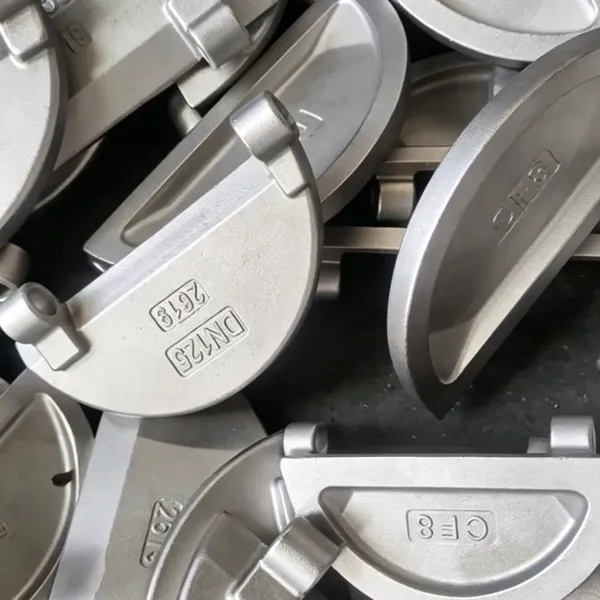 Read More
-
What Are Valve Casting Parts? Body Types and Pressure Classes
November 20, 2026A gate valve body ordered at class 150 arrived for a steam line running at 24 bar. The body was sound, the flange drilling matched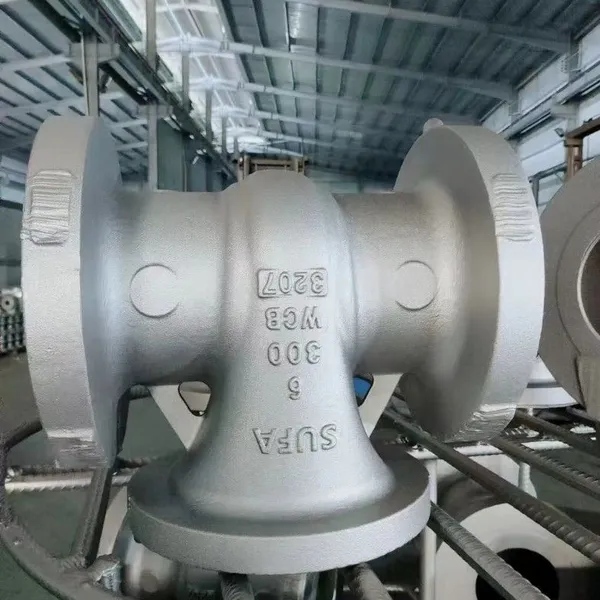 Read More
-
Passivation and Pickling for Stainless Hardware
November 19, 2026A crate of passivated stainless brackets arrived with rust spots in a line down one face. The parts had been through a nitric bath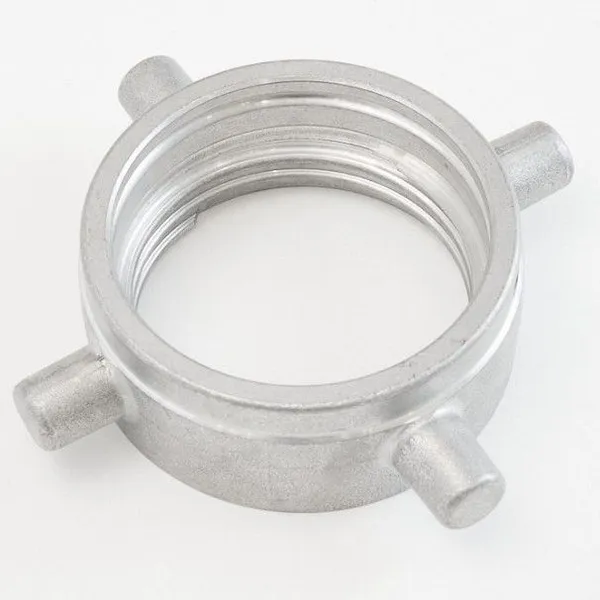 Read More
-
What Is Stainless Precision Hardware? Grades and Types
November 19, 2026A food equipment builder ordered 6,000 stainless pins and bushings in grade 304, installed them on a washdown line, and found brow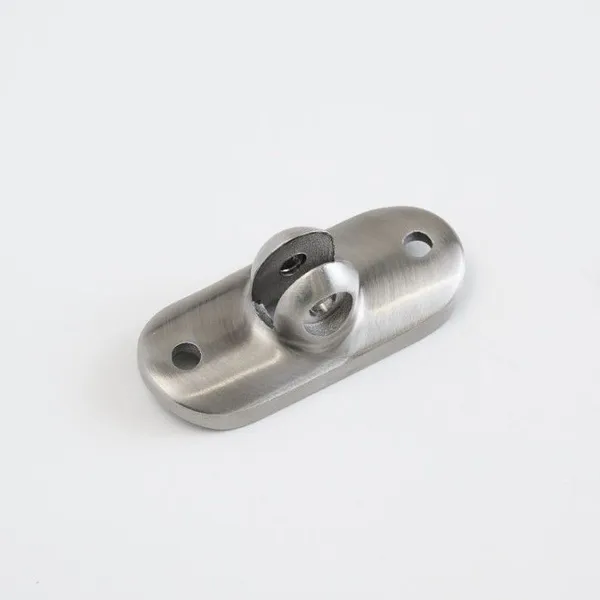 Read More

Contact Us
Recommended Products
-
 Custom CNC Machining for Aluminum and Metal Parts – OEM and ODM SolutionsNegotiableMOQ: 200 Pieces
-
CNC Machining Service for Automotive Brass Fittings With 0.8μm Surface FinishNegotiableMOQ: 500 Pieces
-
CNC Machining Service for Hydraulic System Components in Carbon SteelNegotiableMOQ: 500 Pieces
-
High-Tolerance CNC Milling Parts Titanium/Stainless Steel With Smooth Finish for Aerospace Industry ApplicationsUS$ 14MOQ: 10 Units
-
Compatible CNC Machining Service for CAD Files and Various Material TypesUS$ 12MOQ: 10 Units


-
Durable CNC Aluminum Alloy Milling Parts With Anodized Finish for Electronics and Robotics EnclosuresUS$ 12MOQ: 10 Units
-
CNC Machining Service for Industrial Robotics Aluminum Alloy PartsNegotiableMOQ: 500 Pieces
-
Professional CNC Machining Services for Aluminum, Steel, and Plastic Components With Custom SizesNegotiableMOQ: 10 Units
-
Small-Scale CNC Machining Precision Metal Parts With Tight Tolerances for RoboticsUS$ 12MOQ: 10 Units
-
5-Axis CNC Milling and Turning Services for Rapid Prototyping of Metal and Alloy PartsNegotiableMOQ: 200 Pieces


-
CNC Machining Precision Metal Parts With Fast Delivery for Prototyping and ProductionUS$ 12MOQ: 10 Units
-
Medical Grade CNC Machining Precision Metal Parts for Surgical DevicesUS$ 14MOQ: 10 Units
-
Custom CNC Machining Precision Metal Parts in Multiple Sizes and MaterialsUS$ 14MOQ: 10 Units
-
CNC Machining Service for Automotive Applications: Engine Parts and Mounting BracketsUS$ 12MOQ: 10 Units
-
Hot Selling CNC Milling Turning Customized Metal CNC Machining Services Non-standard Parts Turning Milling Composite ProcessingUS$ 10MOQ: 10 Units


-
High Grade Wholesale CNC Machining Precision Metal Parts Oem Odm Customized Aluminum Alloy Milling PartsUS$ 11MOQ: 10 Units
-
CNC Milling Parts Stainless Steel/Aluminum Alloy Compatible With CNC Machines for High-Accuracy Industrial FabricationUS$ 14MOQ: 10 Units
-
Precision CNC Milling Parts Aluminum/Steel/Brass in Various Sizes for Industrial Applications & Machinery FabricationUS$ 14MOQ: 10 Units
-
Lightweight CNC Aluminum Alloy Milling Parts Optimized for Energy-Efficient Machinery and EquipmentUS$ 12MOQ: 10 Units
-
Factory Direct Sale OEM Precision Casting Forging Service CustomizedNegotiableMOQ: 10 Pieces


