


 Business License

What Are Valve Casting Parts? Body Types and Pressure Classes
A gate valve body ordered at class 150 arrived for a steam line running at 24 bar. The body was sound, the flange drilling matched, and the paperwork was complete. The problem was that a class 150 carbon steel body is rated for that pressure near ambient temperature alone, and at 250 °C its allowable fell below the line pressure.
That mistake is common because valve casting parts are usually bought by description rather than by specification. A buyer asks for a six-inch gate valve, and the price comes back without anyone asking what the line carries or at what temperature.
The notes below cover the structure of a valve body, the four types that cover most demand, and the class system that decides whether the part holds. They are the valve casting parts basics a buyer needs before a first order.
1. What a Valve Body Has to Do
A valve body is the pressure vessel of the assembly. It connects two pipe ends, houses the closure, and provides the seat against which the closure seals. Everything else in the valve is either trim that wears or an operator that moves the trim.
For valve casting parts basics the body carries three loads at once: internal pressure, the bending moment from the connected pipe, and the seating load when the valve closes. The wall thickness and the flange design follow from those three, which is why a body cannot be scaled up or down by eye.
Understanding valve casting parts basics starts with accepting that the body is designed to a standard rather than to a drawing. The standard sets the wall, the flange dimensions, the minimum roundness of the bore and the test pressure, and the drawing adds the application features on top.
2. Valve Casting Parts Basics: Body, Bonnet, Trim
Every valve breaks into three groups. The body and bonnet form the pressure boundary. The trim, which is the disc, the seat and the stem, does the work. The operator, whether a handwheel, a gearbox or an actuator, moves the trim.
For a casting buyer, the split matters because the three groups are often bought separately. A foundry casts the body and bonnet, a machine shop finishes the flange faces and the seat pocket, and a trim supplier fits the internals. The body casting has to accommodate all three sets of tolerances.
The bonnet joint is the feature most often specified badly. A bolted bonnet with a spiral wound gasket needs a flat face and a defined bolt circle, while a welded bonnet removes the joint and the leak path with it. At Changfeng Mechanical Factory the bonnet joint is settled at the quotation stage for that reason. The choice affects the casting, the machining and the repair procedure, and it changes the valve pressure class rating test that follows.
3. Valve Body Types: Gate, Globe, Ball, Butterfly
Valve body types differ in how the closure moves and what that means for flow. A gate slides a disc across the bore and offers almost no resistance when open. A globe moves a plug along the flow axis and throttles well but adds pressure drop.
A ball turns a drilled sphere a quarter turn and gives tight shutoff with low torque. A butterfly turns a disc in the bore and packs a large port into a short face-to-face length, which is why it dominates large water lines. A check valve is a body type as well, with no operator at all.
In practice the casting follows the valve body types one by one. A gate body is a straight-through barrel with a bonnet neck. A globe body has an internal partition and a change of direction. A ball body is short and stiff with a large boss for the stem, and a butterfly body is a ring with a seat, often with a resilient liner.
4. Valve Pressure Class Rating: 150, 300, 600 and What They Mean
A valve pressure class rating is a reference to a table, not a single pressure. Class 150 carbon steel is rated at about 19.6 bar at 38 °C, class 300 at about 51 bar, and class 600 at about 102 bar, and each of those figures falls as the temperature rises.
The class also fixes the flange dimensions, the bolt count and the wall thickness, so a class 300 body is physically larger at the same bore than a class 150 body. That is why an upgrade is rarely a drop-in replacement, and why the pipe spool usually changes with it.
A valve pressure class rating does not fix the material. A class 150 body can be carbon steel, stainless or alloy, and the allowable pressure changes with the grade chosen. The material and the class are two separate decisions that are read together from the same table.
5. Pressure and Temperature in a Class Rating
The derating curve is the part buyers skip. A carbon steel body rated 19.6 bar at 38 °C is rated at roughly 13 bar at 350 °C, because the allowable stress of the steel falls with temperature. Steam lines and hot oil lines live in exactly the range where that matters.
The class rating assumes the body is at uniform temperature. A valve that sees a hot line and a cold ambient, or a thermal shock on start-up, experiences a gradient the table does not describe, and the design has to account for it separately.
A valve pressure class rating also has a lower bound. Carbon steel bodies are usually limited to about minus 29 °C for impact reasons, and a cryogenic duty moves the casting to a low temperature grade with a different chemistry and a different test regime.
6. Materials Behind a Valve Casting Part
Four material families cover most of the market. Carbon steel in WCB handles water, steam and oil up to about 425 °C. Low alloy grades such as WC6 and WC9 add elevated temperature strength. Austenitic stainless in CF8 and CF8M covers corrosive duty, and bronze or cast iron covers low pressure water and utility service.
The grade decides the casting route as well. WCB pours readily in sand, CF8M needs cleaner melting practice and a solution anneal, and a duplex grade needs a controlled cooling rate to keep the phase balance. A foundry that casts one family well may not cast another at the same quality level.
At Ningbo Changfeng Mechanical Factory a valve body quote names the grade and the heat treatment, because two foundries quoting WCB can differ by a normalising cycle that changes the impact result without changing the price much.
7. Comparing Four Valve Body Types
The table compares the four common types on the points a buyer weighs before choosing, with the casting implication noted for each.
| Type | Typical duty | Shutoff | Pressure drop | Casting note |
|---|---|---|---|---|
| Gate | On and off, infrequent operation | Good, seat dependent | Very low when open | Straight barrel, long bonnet neck |
| Globe | Throttling and frequent operation | Good | High, by design | Internal partition, direction arrow critical |
| Ball | Quarter turn isolation | Very good | Very low when open | Short body, heavy stem boss, tight bore |
| Butterfly | Large diameter water and air | Good with a liner | Low to moderate | Ring body, liner seat, thin section control |
8. A Case: A Gate Valve Body Ordered at the Wrong Class
The body described at the top was a six-inch gate valve in WCB, ordered at class 150 for a saturated steam header at 24 bar and 250 °C. The purchase order named the size, the type and the class, and nothing else.
At 250 °C the allowable for a class 150 carbon steel body is roughly 17 bar, so the valve was under-rated for the line by about 30 percent. Nobody noticed at commissioning because the line ran at 18 bar for the first month, and the weep appeared when the header was brought to full pressure.
The replacement was a class 300 body in the same material, with the same bore and a longer face-to-face dimension. Two pipe spools had to be re-made to suit the new flange drilling, which cost more than the valve.
The lesson is that a valve pressure class rating has to be read at the operating temperature rather than at ambient. Changfeng Mechanical now asks for the design pressure and temperature on every valve enquiry, and answers with the derated allowable rather than the class number.
9. Reading a Valve Casting Drawing
A valve casting drawing carries more than dimensions. It names the standard the body is designed to, the class, the material grade, the flange facing, the test pressure and the marking requirement. A drawing without those is a shape, not a specification.
Of all the valve casting parts basics, the seat pocket is the feature to check first. Its diameter, depth and concentricity to the bore decide whether the trim seals, and a tolerance that is generous there cannot be recovered at assembly. The stem bore through the bonnet neck is the second, since it sets the packing life. Both features differ across valve body types, so a drawing cannot be reused between them without a check, so Ningbo Changfeng Mechanical keeps a separate drawing number for every combination of size, class and end connection.
Marking closes the loop. A cast-on or stamped heat number, the class, the size and the material grade let a valve casting part be traced to its test bar and its radiograph years later, which is what an audit asks for first.
10. Frequently Asked Questions on Valve Casting Parts Basics
10.1 What do the letters WCB and CF8M mean?
They are material grades from the ASTM casting specifications. WCB is a carbon steel casting grade used for general service up to about 425 °C, and CF8M is the austenitic stainless grade equivalent to 316, with molybdenum for chloride resistance. The letters describe the chemistry and the heat treatment rather than the pressure rating, which comes from the class. A class 150 body and a class 600 body can both be made in WCB, and both will be tested at different pressures, so read the grade and the class as two separate lines on the drawing.
10.2 Which valve body types suit steam service?
Gate and globe bodies dominate, because both tolerate high temperature and both can be fitted with a bonnet that keeps the packing away from the hot zone. A ball valve works in steam, and the seat material becomes the limit, often around 180 to 200 °C. Butterfly valves appear on large low pressure steam lines with a metal seat, and rarely on high pressure ones. Above 300 °C the packing and the gasket become the limiting parts rather than the body, so the specification has to cover them too.
10.3 Why is a class 300 valve so much bigger than a class 150 valve?
Because the class fixes the wall thickness and the flange dimensions as well as the pressure. At the same bore, a class 300 body carries a thicker wall, a larger flange diameter and more bolts, so the casting weighs more and the face-to-face length grows. That is why an upgrade usually requires new pipe spools rather than a straight swap. Check the face-to-face dimension and the flange drilling before ordering, since both change with the class and neither is obvious from the size alone.
10.4 Can a valve body be repaired by welding?
Sometimes, and the rules belong in the specification rather than in the workshop. A defect in a non-critical area may be excavated and welded with a qualified procedure and a post-weld heat treatment, and the repair is then radiographed again. Pressure boundary welds on a cast body are usually prohibited outright, and a repair that is not recorded is a liability at the next inspection. Write the repair policy into the purchase order, with the areas that may be repaired and the tests that follow, and require a repair map with the delivery.
Recently Posted
-
C36000 vs C37700 Brass Parts: Machinability and Cost Compared
November 20, 2026A fitting shop moved a family of brass adapters from C36000 to C37700 to save on material, and the piece price went up. The alloy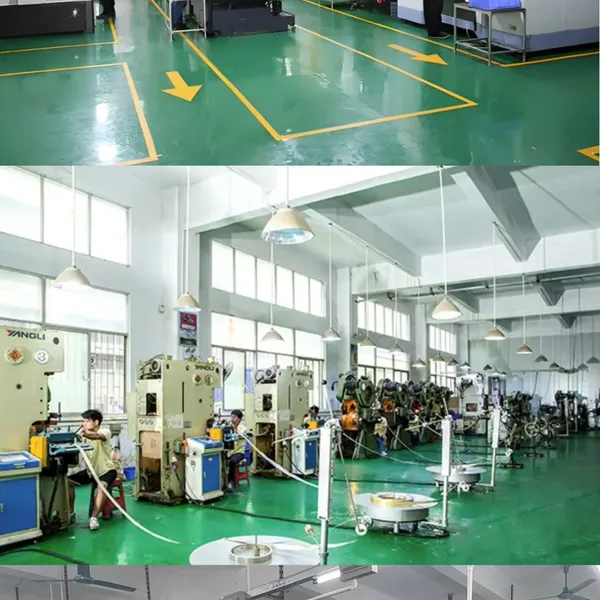 Read More
-
Valve Body Casting vs Forging for High Pressure Service
November 20, 2026A valve body that weeps at a flange during a hydrostatic test is rarely a machining fault. The route that produced the body, poure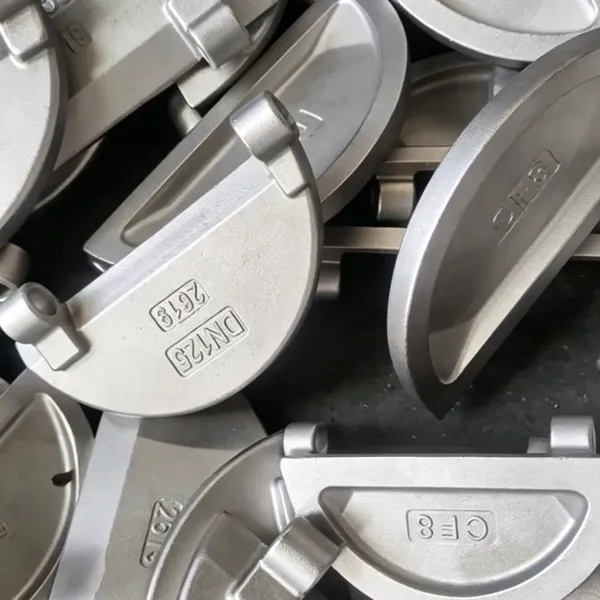 Read More
-
Passivation and Pickling for Stainless Hardware
November 19, 2026A crate of passivated stainless brackets arrived with rust spots in a line down one face. The parts had been through a nitric bath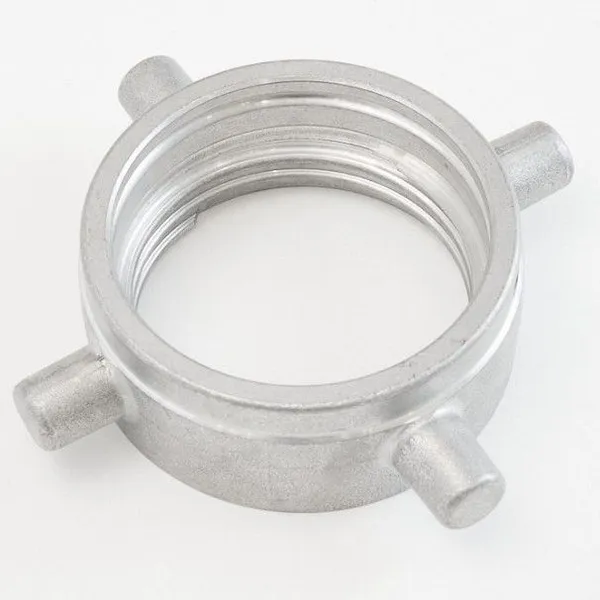 Read More
-
What Is Stainless Precision Hardware? Grades and Types
November 19, 2026A food equipment builder ordered 6,000 stainless pins and bushings in grade 304, installed them on a washdown line, and found brow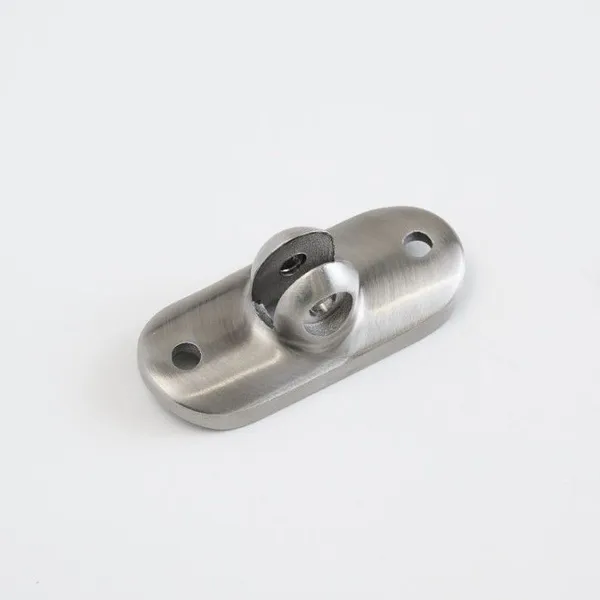 Read More

Contact Us
Recommended Products
-
 Custom CNC Machining for Aluminum and Metal Parts – OEM and ODM SolutionsNegotiableMOQ: 200 Pieces
-
CNC Machining Service for Automotive Brass Fittings With 0.8μm Surface FinishNegotiableMOQ: 500 Pieces
-
CNC Machining Service for Hydraulic System Components in Carbon SteelNegotiableMOQ: 500 Pieces
-
High-Tolerance CNC Milling Parts Titanium/Stainless Steel With Smooth Finish for Aerospace Industry ApplicationsUS$ 14MOQ: 10 Units
-
Compatible CNC Machining Service for CAD Files and Various Material TypesUS$ 12MOQ: 10 Units


-
Durable CNC Aluminum Alloy Milling Parts With Anodized Finish for Electronics and Robotics EnclosuresUS$ 12MOQ: 10 Units
-
CNC Machining Service for Industrial Robotics Aluminum Alloy PartsNegotiableMOQ: 500 Pieces
-
Professional CNC Machining Services for Aluminum, Steel, and Plastic Components With Custom SizesNegotiableMOQ: 10 Units
-
Small-Scale CNC Machining Precision Metal Parts With Tight Tolerances for RoboticsUS$ 12MOQ: 10 Units
-
5-Axis CNC Milling and Turning Services for Rapid Prototyping of Metal and Alloy PartsNegotiableMOQ: 200 Pieces


-
CNC Machining Precision Metal Parts With Fast Delivery for Prototyping and ProductionUS$ 12MOQ: 10 Units
-
Medical Grade CNC Machining Precision Metal Parts for Surgical DevicesUS$ 14MOQ: 10 Units
-
Custom CNC Machining Precision Metal Parts in Multiple Sizes and MaterialsUS$ 14MOQ: 10 Units
-
CNC Machining Service for Automotive Applications: Engine Parts and Mounting BracketsUS$ 12MOQ: 10 Units
-
Hot Selling CNC Milling Turning Customized Metal CNC Machining Services Non-standard Parts Turning Milling Composite ProcessingUS$ 10MOQ: 10 Units


-
High Grade Wholesale CNC Machining Precision Metal Parts Oem Odm Customized Aluminum Alloy Milling PartsUS$ 11MOQ: 10 Units
-
CNC Milling Parts Stainless Steel/Aluminum Alloy Compatible With CNC Machines for High-Accuracy Industrial FabricationUS$ 14MOQ: 10 Units
-
Precision CNC Milling Parts Aluminum/Steel/Brass in Various Sizes for Industrial Applications & Machinery FabricationUS$ 14MOQ: 10 Units
-
Lightweight CNC Aluminum Alloy Milling Parts Optimized for Energy-Efficient Machinery and EquipmentUS$ 12MOQ: 10 Units
-
Factory Direct Sale OEM Precision Casting Forging Service CustomizedNegotiableMOQ: 10 Pieces


