
 Business License

CNC Milling vs CNC Turning Parts: Choosing by Geometry and Volume
Two quotes for the same housing came back 41 percent apart, and neither shop had made a mistake. One had priced it as a milled block, removing most of the material as chips. The other had priced it as a turned part with four flats cut on live tooling, starting from bar stock close to the finished diameter.
That gap is the everyday consequence of the choice between CNC milling vs turning parts, and it is decided by two things rather than by preference: how much of the shape is a surface of revolution, and how many pieces a year are needed.
The notes below set out the test for each, the cost mechanics behind the difference, and the cases where the answer is both processes in one setup.
1. Round or Prismatic: The First Machining Choice
Turning rotates the workpiece against a stationary tool. Milling rotates the tool against a stationary workpiece. Everything else follows from that difference, including which features each process can hold cheaply.
The practical test is symmetry. If the part can be described by a profile revolved around one axis, with a few holes, flats or slots added afterwards, turning is the cheaper base process. If the shape has no natural axis, or if most of its features sit on several faces, milling is the base process.
Most real parts sit somewhere in between, which is why the question in CNC milling vs turning parts is not which machine to use but which process carries the part. A part that is 80 percent turned and 20 percent milled should be turned first, because the turning operation sets the datum that the milling follows.
2. CNC Milling vs Turning Parts: The Short Answer
A round part with a length-to-diameter ratio above about 0.3 belongs on a lathe. Below that, a thin disc, the choice narrows: a lathe still works from bar, while a mill may cut several discs from one plate at once.
A prismatic part with pockets on two or three faces belongs on a mill, ideally a three-axis machine with two setups or a five-axis machine with one. A part with a turned body and radial holes is where the two processes meet, and where a turn-mill centre earns its price.
The volume test comes second and can override a part geometry machining choice in one direction. Turning from bar needs a bar diameter larger than the part, so a 200 mm flange in low volume wastes most of the bar; milling from plate at that size wastes less. That single arithmetic explains many quotes that look wrong until the stock is priced.
3. Part Geometry Machining Choice: Five Features to Check
The first feature in any part geometry machining choice is axis symmetry, already covered. The second is whether holes cross the axis, because a cross hole on a lathe needs live tooling or a second operation, and either one adds cost that the drawing does not show.
The third is wall thickness. A thin ring holds its roundness better when turned, since the cutting force is continuous and radial, while the same ring milled from plate distorts as the internal pocket releases stress. The fourth is tolerance on diameter, where turning holds plus or minus 0.01 mm without drama and milling needs a boring step to match it.
The fifth is surface finish on a sealing face. A turned face carries a concentric lay that seals well against an O-ring, while a milled face carries a swept pattern that can create a leak path under a gasket. That difference alone decides the process on many hydraulic and pneumatic parts. At Changfeng Mechanical Factory a sealing face is a routing criterion rather than a finishing note, for that reason.
4. Milled vs Turned Components: Where the Cost Difference Starts
Milled vs turned components differ first in stock. A turned part starts as bar close to the finished diameter, and the material removed is a ring of chips whose volume falls as the bar size is chosen well. A milled part starts as plate or block, and the volume removed is usually larger and harder to recover.
Yield is the number to ask for. A turned shaft from the right bar recovers 70 to 85 percent of the purchased material, while the same part milled from a block recovers 30 to 50 percent. On stainless or aluminium bronze, that difference is often larger than the hourly rate difference between two shops.
Setup count is the second term. A turned part normally runs in two setups, front and back, or one on a machine with a subspindle. A milled part with features on four sides runs in three or four setups unless a five-axis machine is used, and each setup carries a handling cost and a tolerance stack.
5. Turn-Mill Work: When Milling and Turning Share a Setup
Between CNC milling vs turning parts there is a third option: a turn-mill centre carrying driven tools on the turret, and often a second spindle and a bar feeder. It can turn the body, drill a cross hole, mill a flat and part off the component without an operator touching it between operations.
The gain is not speed on any single feature, it is the removal of handling. Each transfer between machines adds a queue, a re-chuck, a possible loss of concentricity and a document. On a part that needs four radial holes and two flats, that removal often cuts lead time by half.
The limits are real. Live tooling runs slower than a dedicated mill spindle, the Y-axis travel is short, and the number of tools in the turret caps how many features can be completed. At Ningbo Changfeng Mechanical Factory a part is routed to turn-mill when the milling content stays under about 30 percent of the cycle, because above that a second operation on a mill is faster overall.
6. Comparing Milled vs Turned Components on Cost
The table sets milled vs turned components against the factors that move a piece price, for a part in the 20 to 120 mm size range at 1,000 pieces a year.
| Factor | Turned from bar | Milled from plate or block |
|---|---|---|
| Geometry fit | Axisymmetric, with modest cross features | Prismatic, pockets on several faces |
| Typical tolerance | Plus or minus 0.01 mm on diameter | Plus or minus 0.02 to 0.05 mm, tighter with boring |
| Roundness | 0.003 to 0.01 mm as cut | Requires boring or a circular interpolation pass |
| Surface finish | Ra 0.8 to 1.6 micrometre, concentric lay | Ra 1.6 to 3.2 micrometre, swept lay |
| Material yield | 70 to 85 percent with the right bar | 30 to 50 percent from plate |
| Setups | One or two | Two to four, fewer on five-axis |
| Volume sweet spot | 500 to 50,000 per year | 1 to 5,000 per year, or complex shapes at any volume |
7. Volume Changes the Machining Choice
At ten pieces, the CNC milling vs turning parts decision is about avoiding tooling. A milled part from plate needs a vice and a program, while a turned part may need a soft jaw or a collet bored to size. Neither needs a fixture, and the mill usually wins on lead time.
At a thousand pieces, the arithmetic shifts to cycle time and stock. Bar-fed turning runs unattended through the night, and the bar remnant is the whole of the waste. At fifty thousand, the choice is between a multi-spindle lathe, a dedicated fixture on a mill, or a casting that removes the machining altogether.
The trap in a part geometry machining choice is assuming one answer holds across a product family. A family of six similar bodies may share a turning process for four of them, while two need milling because of a port angle. Splitting the family by geometry is cheaper than forcing one process on all six. Ningbo Changfeng Mechanical quotes each body in the family separately for that reason, then groups the four that share a process.
8. A Case: A Housing That Looked Turned and Was Milled
A sensor housing, 90 mm diameter by 60 mm long, with four flats on the outside, eight radial holes and a 3 mm wall, was quoted at 2,000 pieces a year. The first quote milled it from a 100 by 100 by 65 mm block in 12 minutes, with a material yield near 38 percent.
The second quote turned it from 95 mm bar in 4.5 minutes on a turn-mill centre, drilled the radial holes on live tooling and milled the flats in the same setup. Yield rose to about 62 percent, and the two operations became one.
The piece price fell 34 percent, and the lead time fell from 18 days to 9. The change was not a better machine; it was recognising that the part was a revolved shape with features, not a block with a hole in it. Changfeng Mechanical now runs a geometry check before quoting any housing over 50 mm.
9. Process Notes That Keep a Machining Choice Honest
Put the datum on the face the process creates first. On a turned part that is the turned end face, and on a milled part it is a machined face rather than a saw cut. A datum on a raw surface carries the stock variation into every dimension measured from it.
Do not specify roundness on a milled bore unless the function needs it. A circular interpolation pass on a mill produces a lobed form that a two-point micrometer will not reveal, and a boring step that fixes it costs more than the tolerance is worth on most parts. The same reasoning decides milled vs turned components in the first place, since neither process is tight everywhere.
State which side the burr is allowed on. Turning leaves a burr at part-off, milling leaves one at the exit of every cut, and a drawing that is silent on the subject gets whichever side the operator prefers. A deburring note costs a line and prevents a handling injury and a rejected lot.
10. Frequently Asked Questions on CNC Milling vs Turning Parts
10.1 Can a turned part have holes that are not on the axis?
Yes, with live tooling on the turret or with a second operation on a mill. A radial hole drilled on a lathe with driven tooling adds a few seconds and holds position within about 0.05 mm, which suits most fluid ports. A hole that must be square to a flat, or that sits at a compound angle, usually moves to a mill or a turn-mill with a Y axis. The cost difference comes from the extra axis, not from the hole.
10.2 Which route gives a better surface finish?
Turning generally produces a finer finish on cylindrical surfaces, at Ra 0.8 to 1.6 micrometre as cut, because the tool runs continuously and the feed marks are uniform around the circumference. Milling produces a swept pattern at Ra 1.6 to 3.2 micrometre, and the finish varies across the face as the tool path changes direction. Where a face must seal against an O-ring, the concentric lay of a turned surface is an advantage rather than a detail. Where a face must be flat rather than round, the mill wins and the finish is secondary.
10.3 Is milled vs turned components a decision that can change later?
It can, and it often should. A part launched at 200 pieces may be milled from plate, then move to bar-fed turning when volume passes a thousand, with no change to the drawing beyond the datum note. What blocks the move is a tolerance tied to a milled feature, or a flat specified on a surface that turning would leave round, or a squareness callout on a turned end. Keep the drawing neutral and the process can follow the volume, which is why a process note belongs in the file rather than in an email.
10.4 What does part geometry machining choice mean for a thin-walled part?
In a part geometry machining choice for a thin wall it usually means turning, or milling with the wall held by a fixture. A ring turned from bar holds roundness because the cutting force is radial and continuous, while the same ring milled from plate distorts as internal stress releases. Where milling is unavoidable, rough the pocket, stress relieve, then finish in a second setup and expect to scrap the first few pieces while the fixture settles. A wall thinner than 2 mm on a 60 mm diameter is where the difference shows up as scrap rather than as a tolerance discussion.
Recently Posted
-
Swiss Turning vs Conventional Turning: Small Part Cost and Cycle Time
November 24, 2026A 4 mm pin, 40 mm long, quoted at 0.42 each from a conventional lathe and 0.26 from a sliding head machine. The part was the same, Read More
-
Aluminum vs Steel CNC Milling Parts: Cut Speed, Finish and Cost
November 24, 2026A mounting bracket was quoted at two prices, one in 6061 aluminum and one in 1045 steel, and the aluminum part came out cheaper at Read More
-
Cast Iron vs Aluminum Casting Parts: Weight, Damping, Machinability
November 23, 2026Two gearbox covers were made to the same drawing, one in grey iron and one in aluminum, and the aluminum version passed every dime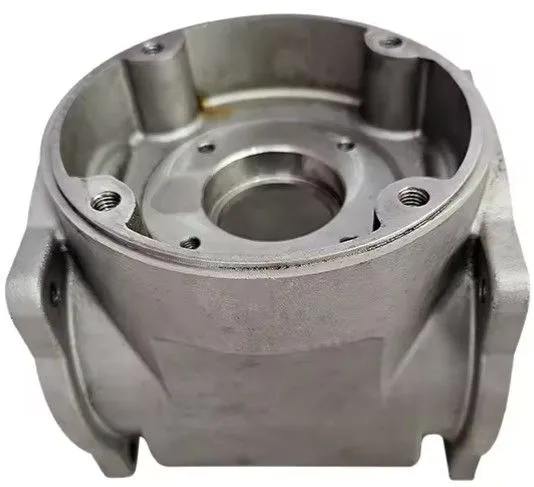 Read More
-
Sand Casting vs Investment Casting Parts: Finish and Cost
November 23, 2026A bracket arrived as a sand casting with 2.5 mm of machining allowance on every face. The shop machined it in two operations, foun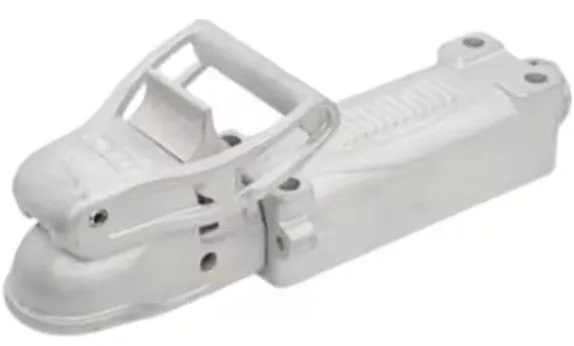 Read More

Contact Us
Recommended Products
-
 Custom CNC Machining for Aluminum and Metal Parts – OEM and ODM SolutionsNegotiableMOQ: 200 Pieces
-
CNC Machining Service for Automotive Brass Fittings With 0.8μm Surface FinishNegotiableMOQ: 500 Pieces
-
CNC Machining Service for Hydraulic System Components in Carbon SteelNegotiableMOQ: 500 Pieces
-
High-Tolerance CNC Milling Parts Titanium/Stainless Steel With Smooth Finish for Aerospace Industry ApplicationsUS$ 14MOQ: 10 Units
-
Compatible CNC Machining Service for CAD Files and Various Material TypesUS$ 12MOQ: 10 Units
-
Durable CNC Aluminum Alloy Milling Parts With Anodized Finish for Electronics and Robotics EnclosuresUS$ 12MOQ: 10 Units
-
CNC Machining Service for Industrial Robotics Aluminum Alloy PartsNegotiableMOQ: 500 Pieces
-
Professional CNC Machining Services for Aluminum, Steel, and Plastic Components With Custom SizesNegotiableMOQ: 10 Units
-
Small-Scale CNC Machining Precision Metal Parts With Tight Tolerances for RoboticsUS$ 12MOQ: 10 Units
-
5-Axis CNC Milling and Turning Services for Rapid Prototyping of Metal and Alloy PartsNegotiableMOQ: 200 Pieces
-
CNC Machining Precision Metal Parts With Fast Delivery for Prototyping and ProductionUS$ 12MOQ: 10 Units
-
Medical Grade CNC Machining Precision Metal Parts for Surgical DevicesUS$ 14MOQ: 10 Units
-
Custom CNC Machining Precision Metal Parts in Multiple Sizes and MaterialsUS$ 14MOQ: 10 Units
-
CNC Machining Service for Automotive Applications: Engine Parts and Mounting BracketsUS$ 12MOQ: 10 Units
-
Hot Selling CNC Milling Turning Customized Metal CNC Machining Services Non-standard Parts Turning Milling Composite ProcessingUS$ 10MOQ: 10 Units

-
High Grade Wholesale CNC Machining Precision Metal Parts Oem Odm Customized Aluminum Alloy Milling PartsUS$ 11MOQ: 10 Units
-
CNC Milling Parts Stainless Steel/Aluminum Alloy Compatible With CNC Machines for High-Accuracy Industrial FabricationUS$ 14MOQ: 10 Units
-
Precision CNC Milling Parts Aluminum/Steel/Brass in Various Sizes for Industrial Applications & Machinery FabricationUS$ 14MOQ: 10 Units
-
Lightweight CNC Aluminum Alloy Milling Parts Optimized for Energy-Efficient Machinery and EquipmentUS$ 12MOQ: 10 Units
-
Factory Direct Sale OEM Precision Casting Forging Service CustomizedNegotiableMOQ: 10 Pieces