
 Business License

Cast Iron vs Aluminum Casting Parts: Weight, Damping, Machinability
Two gearbox covers were made to the same drawing, one in grey iron and one in aluminum, and the aluminum version passed every dimensional check. It also rang at 1.8 kHz under load, and the machine it was fitted to failed a noise test that the iron version had passed for years.
The comparison between the two metals rarely turns on strength. It turns on mass, on how each material deals with vibration, and on what each one does to a cutting tool over a shift.
The notes below set out the three numbers that decide casting material selection, then follow a case where the lighter part lost the order.
1. Casting Material Selection: The Two Defaults
Casting material selection for a housing, a bracket or a base usually starts between two options. Grey iron is the default where mass, damping and cost per kilogram matter, and aluminum is the default where weight and thermal conductivity matter.
The choice is often made on the drawing of the assembled machine rather than on the part. A base that carries a spindle, a cover that closes a gear mesh and a bracket that holds a sensor all inherit a requirement from the assembly, and the material follows the requirement rather than the other way round.
Density sets the first number. Iron sits near 7.2 grams per cubic centimetre and aluminum near 2.7, so the same envelope in aluminum weighs about 38 percent of the iron version before any section is changed to compensate for stiffness.
2. Cast Iron Parts Machinability: Graphite as a Lubricant
Cast iron parts machinability is unusual because the material lubricates its own cut. The graphite flakes in grey iron act as a solid lubricant at the tool edge, the chips break into small segments, and a carbide insert runs for hundreds of parts in a cast surface without a coolant flood.
Cast iron parts machinability also carries a housekeeping bill. Machining a grey iron housing creates a fine black dust that finds its way into slides, spindles and coolant tanks, and a shop that runs both metals on one machine will transfer it into the aluminum setup.
Ductile iron behaves differently again. The nodular graphite gives strength and ductility, and it costs about 20 percent more tool life than grey iron because the chips are stringier and the cut is tougher, which is why a ductile housing is usually quoted with a longer cycle.
3. Aluminum Casting Parts Weight: The Number That Decides the Design
Aluminum casting parts weight is the figure that sells the material and then sets a trap. A cover that drops from 7.2 kg to 2.7 kg saves 4.5 kg on the machine, and the same cover in aluminum deflects three times as much under the same load unless the section is thickened.
Stiffness has to be bought back with geometry. Aluminum has a modulus near 70 GPa against 100 to 150 GPa for iron, so a rib pattern that works in iron gives a soft part in aluminum, and the designer ends up adding ribs, doubling a flange or moving to a thicker wall.
Some of the weight saving survives that work. A well-designed aluminum cover still lands 30 to 40 percent lighter than the iron original, which is why the material keeps winning in automation, robotics and anything that has to be moved by a motor.
Where the load path is short, the saving is larger. A bracket that carries a sensor across a 40 mm span takes its stiffness from the section rather than from the modulus, so the aluminum casting parts weight lands close to the theoretical 38 percent of the iron original.
4. Damping: Why a Machine Base Is Not an Aluminum Part
Damping is where the two metals separate by an order of magnitude. Grey iron absorbs vibration because the graphite flakes slide against the matrix and convert the energy to heat, and its damping capacity is roughly ten to twenty times that of aluminum at the same stress.
The damping advantage is also why cast iron parts machinability should not be the first number a buyer reads. A housing that cuts in half the time and transmits twice the vibration has moved cost from the machine shop to the warranty desk, and the second bill is far harder to attribute to a material choice.
That single property explains a large part of machine tool practice. A lathe bed, a surface grinder base and a press frame are iron because the material kills the resonance that would otherwise show up as a chatter mark on the work.
Aluminum can be made to behave, and the cost is mass or a composite. Filling a hollow aluminum casting with a polymer concrete, bonding a constrained layer or simply adding wall thickness all work, and each one eats into the weight that justified the material in the first place.
5. Casting Material Selection by Wall and Section
Section thickness constrains casting material selection before any mechanical argument starts. A sand cast iron wall below 3 mm risks a cold shut, while an aluminum sand casting holds 2.5 to 3 mm and a die casting goes down to 1.5 mm on a small part.
Wall thickness also follows the process rather than the metal. A die cast aluminum housing holds 2 mm on a 150 mm part, and the same envelope in sand cast iron needs 4 mm to fill, so aluminum casting parts weight falls again once the route is chosen. Ningbo Changfeng Mechanical quotes both routes before the wall is fixed, because the process sets the minimum section.
Iron also needs a draft and a radius that suit the sand, and it does not tolerate an isolated thick section because the shrinkage feeds from the thinnest part and leaves a shrink cavity in the heaviest one. Aluminum has the same rule with a different constant, and a die casting adds a porosity risk at any wall change.
The casting route follows the material. Iron is a sand process, aluminum runs in sand, permanent mould or die, and a part that needs 20,000 pieces a year in aluminum will be die cast with a tool cost that a 200 piece iron order never sees.
6. Casting Material Selection: Metal, Machining and Finishing Cost
Metal cost per kilogram favours iron by a wide margin, and cost per part narrows it. Aluminum scrap and ingot run two to three times the iron price per kilogram, and a part that weighs 38 percent as much recovers much of that gap before machining is counted.
Machining usually favours aluminum on time and iron on predictability. Aluminum cuts three to five times faster, and it also grows with heat, with a coefficient near 23 microns per metre per degree against 11 for iron, so an in-process gauge on a warm aluminum part reads a size that changes when the part cools.
A buyer comparing two quotes should compare three figures: piece price, machining time and finishing cost. Cast iron parts machinability shortens the second, the paint system adds to the third, and the aluminum part often wins the first two and loses the third. Changfeng Mechanical Factory lists all three on one sheet so the comparison is made in one place.
Finishing closes some of the gap. Iron needs a paint system to stop rust, aluminum needs an anodise or a powder coat for corrosion and wear, and both add a process, a masking step and a handling cost that the material comparison on its own ignores.
7. Cast Iron vs Aluminum: A Comparison Table
The table collects the numbers behind the four arguments that drive most casting material selection decisions of this kind.
| Point | Grey or ductile iron | Aluminum (sand, permanent or die) |
|---|---|---|
| Density | About 7.2 g/cm3 | About 2.7 g/cm3 |
| Modulus | 100 to 150 GPa depending on grade | About 70 GPa |
| Damping | High, from the graphite flakes | Low, roughly one tenth to one twentieth |
| Machinability | Free cutting, segmented chips, abrasive dust | Fast cutting, built-up edge, sticky chips |
| Minimum wall in sand | 3 mm | 2.5 mm, and 1.5 mm in die casting |
| Thermal expansion | About 11 microns per metre per degree | About 23 microns per metre per degree |
| Corrosion without coating | Surface rust | Oxide film, stains in a wet room |
| Typical use | Beds, frames, housings, pump bodies | Covers, brackets, arms, heat sinks |
8. A Case: Aluminum Casting Parts That Rang
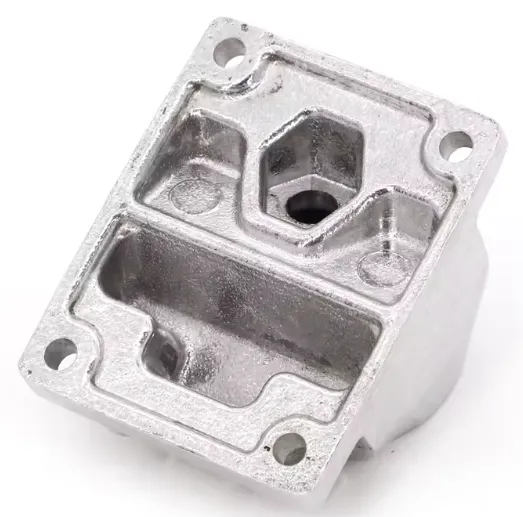
The cover at the top of this page weighed 2.4 kg in aluminum against 6.1 kg in iron, and the weight was the reason the change was approved. The gear mesh inside it ran at 1.8 kHz, and the iron cover had absorbed that tone without anyone noticing.
The aluminum casting parts weight saving had been calculated on the drawing and never on the machine. A 3.7 kg reduction on the cover was real, and the tone it let through cost a noise test, a rib pattern and a second first article.
The aluminum cover acted as a plate. Its first mode sat close to the mesh frequency, the wall was 4 mm, and the sound radiated from a flat face 240 mm across with no rib behind it. The part was correct to the drawing and wrong for the duty.
The first fix was a rib pattern, which moved the mode to 2.4 kHz and cut the radiated noise by 4 dB. The second was a 3 mm constrained layer bonded to the inside face, which cost less than the ribs and dropped it further, and the part stayed in aluminum.
At Ningbo Changfeng Mechanical the drawing for that cover now carries the rib pattern and the damping treatment, and the first article is checked for a mode above 2.4 kHz rather than for dimensions alone.
9. Specifying Casting Material Selection on a Drawing
Name the grade rather than the family. Grey iron to a stated tensile class and aluminum to a stated alloy and temper are two different contracts, and a drawing that reads cast iron leaves the foundry free to choose a grade that machines well and damps less.
Name the property that drove the choice. If damping decided it, state the mode or the noise limit. If weight decided it, state the mass with a tolerance, because a 10 percent mass allowance on a 2.4 kg cover is a different part from one on a 6.1 kg housing.
Name the inspection that proves the choice. A tensile bar from the same pour, a hardness check, a radiograph on a critical section and a dimensional layout together give the buyer a record, and a first article with a modal check closes the case that started this page.
Changfeng Mechanical Factory issues the material certificate with the cast number on it, so a part that fails a year later can be traced to the pour rather than to the pallet.
10. Frequently Asked Questions on Cast Iron and Aluminum Casting Parts
10.1 Is aluminum always lighter for the same part?
It is lighter at the same envelope and not always at the same stiffness. Aluminum has about 38 percent of the density of iron and about half to two thirds of the modulus, so a cover that keeps its wall thickness saves weight and loses rigidity. Where deflection limits the design, the aluminum part needs ribs or a thicker section, and the saving falls to 30 or 40 percent rather than 60. On a large flat cover the rib pattern is a design task in its own right, and it has to be proved before the material change is signed off.
10.2 Why does cast iron damp vibration so well?
Because the graphite flakes inside the matrix slide against the metal and turn vibration into heat. That internal friction is why grey iron shows a damping capacity ten to twenty times that of aluminum, and why machine beds, press frames and gearbox housings are still iron. Ductile iron damps less than grey iron because the graphite is nodular rather than flake. A part that must damp and carry load is therefore a compromise, and the grade is normally chosen for the load first and the damping second.
10.3 Which material is easier to machine?
Aluminum cuts faster and iron cuts more predictably. Aluminum allows three to five times the cutting speed and needs sharp, high-rake tooling to avoid a built-up edge, while grey iron breaks its chips and runs for long periods on one insert. Iron produces abrasive dust that has to be kept away from slides, and aluminum grows with heat, which complicates in-process gauging. A shop running both separates them by machine or by shift, since the dust is the larger risk to a finished aluminum face.
10.4 When should casting material selection move to ductile iron?
When the part has to carry impact, pressure or a bending load that grey iron cannot take. Ductile iron gives tensile strength and elongation that grey iron lacks, which suits pump bodies, valve bodies and suspension parts. The trade is a tougher cut, a longer cycle and a higher piece price, so a housing that carries no load is normally better left in grey iron. An order that mixes both grades in one pattern box will be quoted twice, and the two quotes differ on lead time as well as on price.
Recently Posted
-
Swiss Turning vs Conventional Turning: Small Part Cost and Cycle Time
November 24, 2026A 4 mm pin, 40 mm long, quoted at 0.42 each from a conventional lathe and 0.26 from a sliding head machine. The part was the same, Read More
-
Aluminum vs Steel CNC Milling Parts: Cut Speed, Finish and Cost
November 24, 2026A mounting bracket was quoted at two prices, one in 6061 aluminum and one in 1045 steel, and the aluminum part came out cheaper at Read More
-
CNC Milling vs CNC Turning Parts: Choosing by Geometry and Volume
November 24, 2026Two quotes for the same housing came back 41 percent apart, and neither shop had made a mistake. One had priced it as a milled blo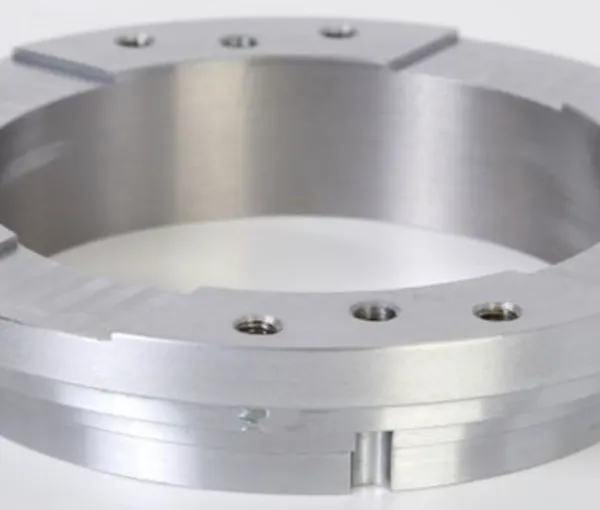 Read More
-
Sand Casting vs Investment Casting Parts: Finish and Cost
November 23, 2026A bracket arrived as a sand casting with 2.5 mm of machining allowance on every face. The shop machined it in two operations, foun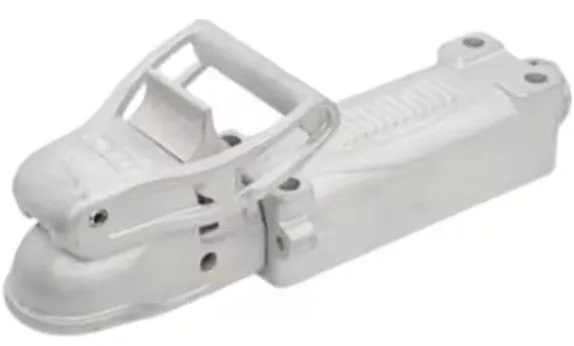 Read More

Contact Us
Recommended Products
-
 Custom CNC Machining for Aluminum and Metal Parts – OEM and ODM SolutionsNegotiableMOQ: 200 Pieces
-
CNC Machining Service for Automotive Brass Fittings With 0.8μm Surface FinishNegotiableMOQ: 500 Pieces
-
CNC Machining Service for Hydraulic System Components in Carbon SteelNegotiableMOQ: 500 Pieces
-
High-Tolerance CNC Milling Parts Titanium/Stainless Steel With Smooth Finish for Aerospace Industry ApplicationsUS$ 14MOQ: 10 Units
-
Compatible CNC Machining Service for CAD Files and Various Material TypesUS$ 12MOQ: 10 Units
-
Durable CNC Aluminum Alloy Milling Parts With Anodized Finish for Electronics and Robotics EnclosuresUS$ 12MOQ: 10 Units
-
CNC Machining Service for Industrial Robotics Aluminum Alloy PartsNegotiableMOQ: 500 Pieces
-
Professional CNC Machining Services for Aluminum, Steel, and Plastic Components With Custom SizesNegotiableMOQ: 10 Units
-
Small-Scale CNC Machining Precision Metal Parts With Tight Tolerances for RoboticsUS$ 12MOQ: 10 Units
-
5-Axis CNC Milling and Turning Services for Rapid Prototyping of Metal and Alloy PartsNegotiableMOQ: 200 Pieces
-
CNC Machining Precision Metal Parts With Fast Delivery for Prototyping and ProductionUS$ 12MOQ: 10 Units
-
Medical Grade CNC Machining Precision Metal Parts for Surgical DevicesUS$ 14MOQ: 10 Units
-
Custom CNC Machining Precision Metal Parts in Multiple Sizes and MaterialsUS$ 14MOQ: 10 Units
-
CNC Machining Service for Automotive Applications: Engine Parts and Mounting BracketsUS$ 12MOQ: 10 Units
-
Hot Selling CNC Milling Turning Customized Metal CNC Machining Services Non-standard Parts Turning Milling Composite ProcessingUS$ 10MOQ: 10 Units
-
High Grade Wholesale CNC Machining Precision Metal Parts Oem Odm Customized Aluminum Alloy Milling PartsUS$ 11MOQ: 10 Units
-
CNC Milling Parts Stainless Steel/Aluminum Alloy Compatible With CNC Machines for High-Accuracy Industrial FabricationUS$ 14MOQ: 10 Units
-
Precision CNC Milling Parts Aluminum/Steel/Brass in Various Sizes for Industrial Applications & Machinery FabricationUS$ 14MOQ: 10 Units
-
Lightweight CNC Aluminum Alloy Milling Parts Optimized for Energy-Efficient Machinery and EquipmentUS$ 12MOQ: 10 Units
-
Factory Direct Sale OEM Precision Casting Forging Service CustomizedNegotiableMOQ: 10 Pieces